Our Commitment

Quality Builds a Better Tomorrow

We set the highest standards in everything we do, because quality creates trust, drives progress and builds a stronger, more sustainable future.

Our Quality Mission
Higher Standards For lasting value
Greater Accuracy For a stronger tomorrow
A Better Future Through trust and quality
QUALITY

Eight Checkpoints, Zero Shortcuts

Our motto is our quality statement: the scope of work starts at raw material procurement and doesn't end until the customer is satisfied. Every checkpoint below breaks down into its own workflow, click any step to see how it actually happens.
01020304 05060708
01
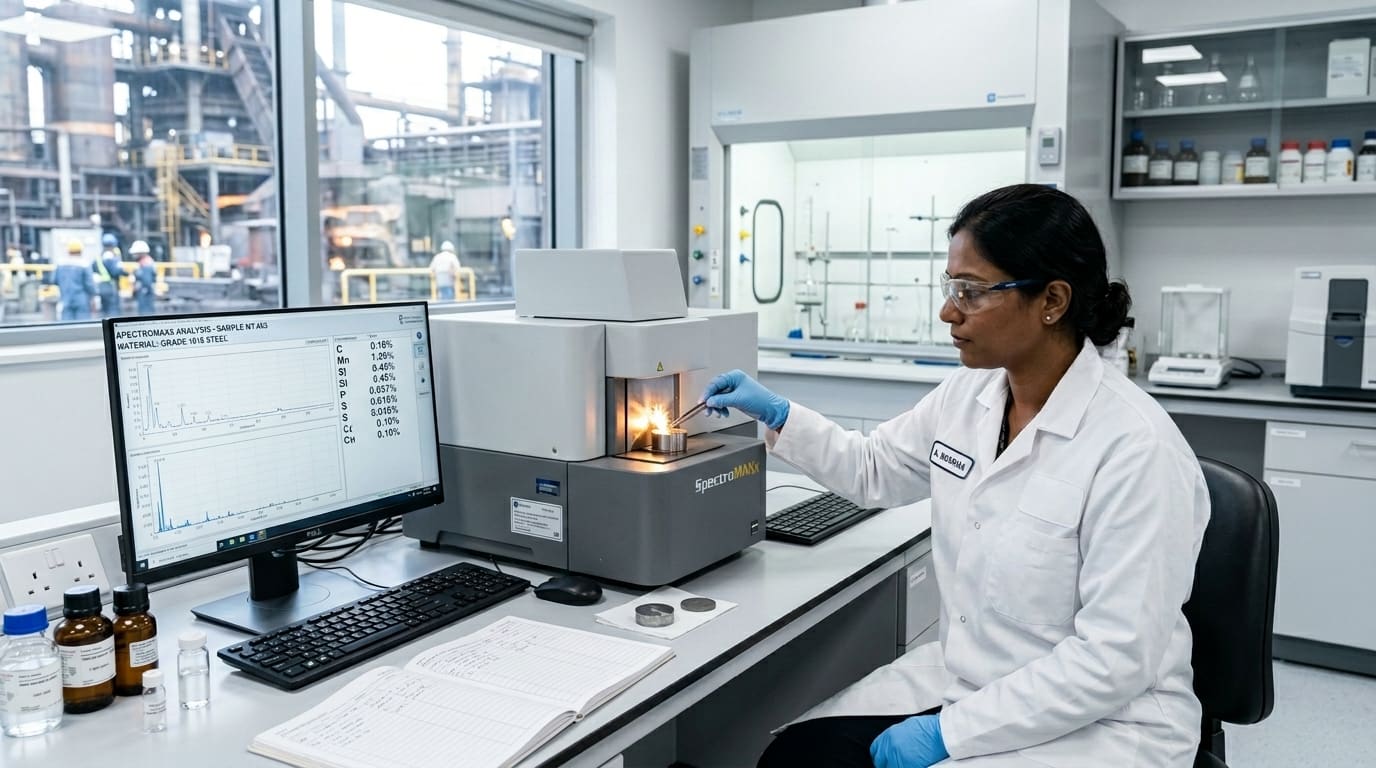
LAB TEST

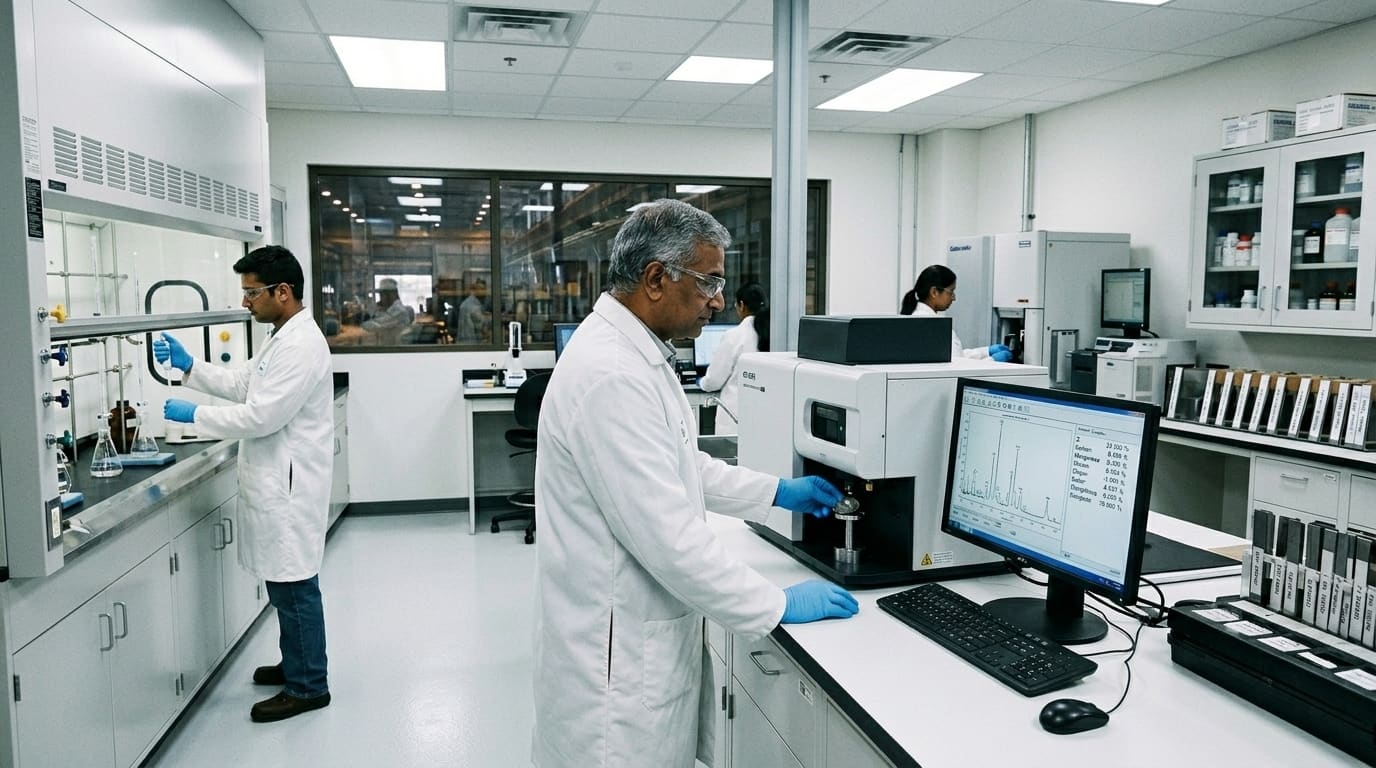
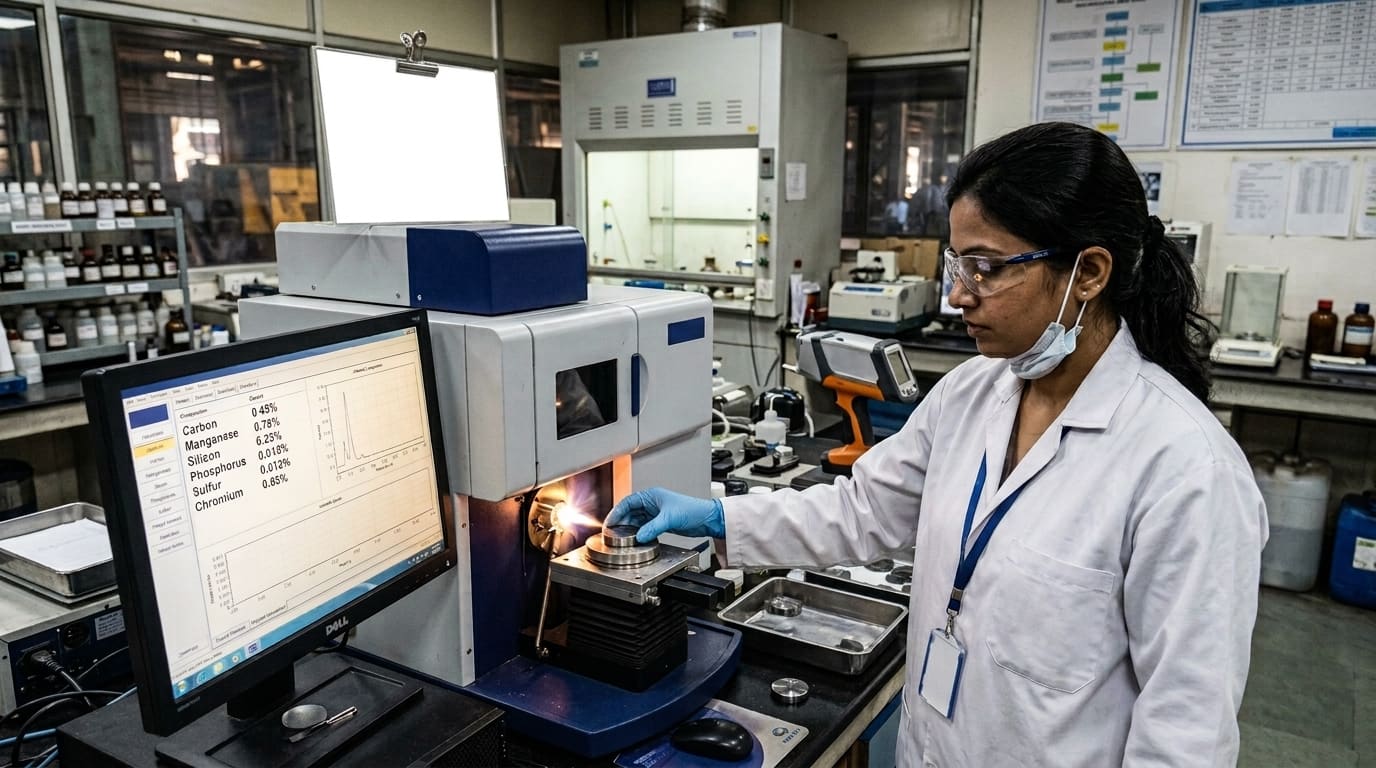
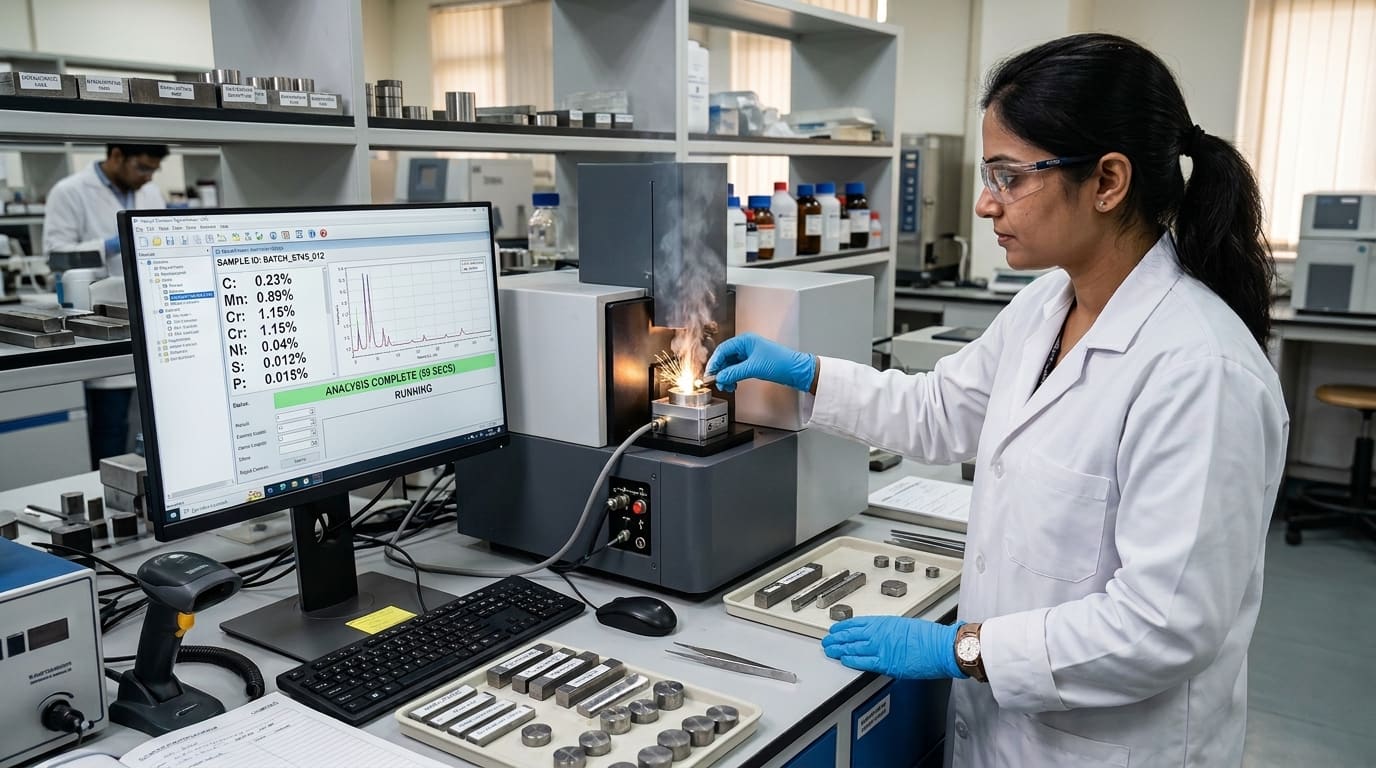
Incoming Material Analysis

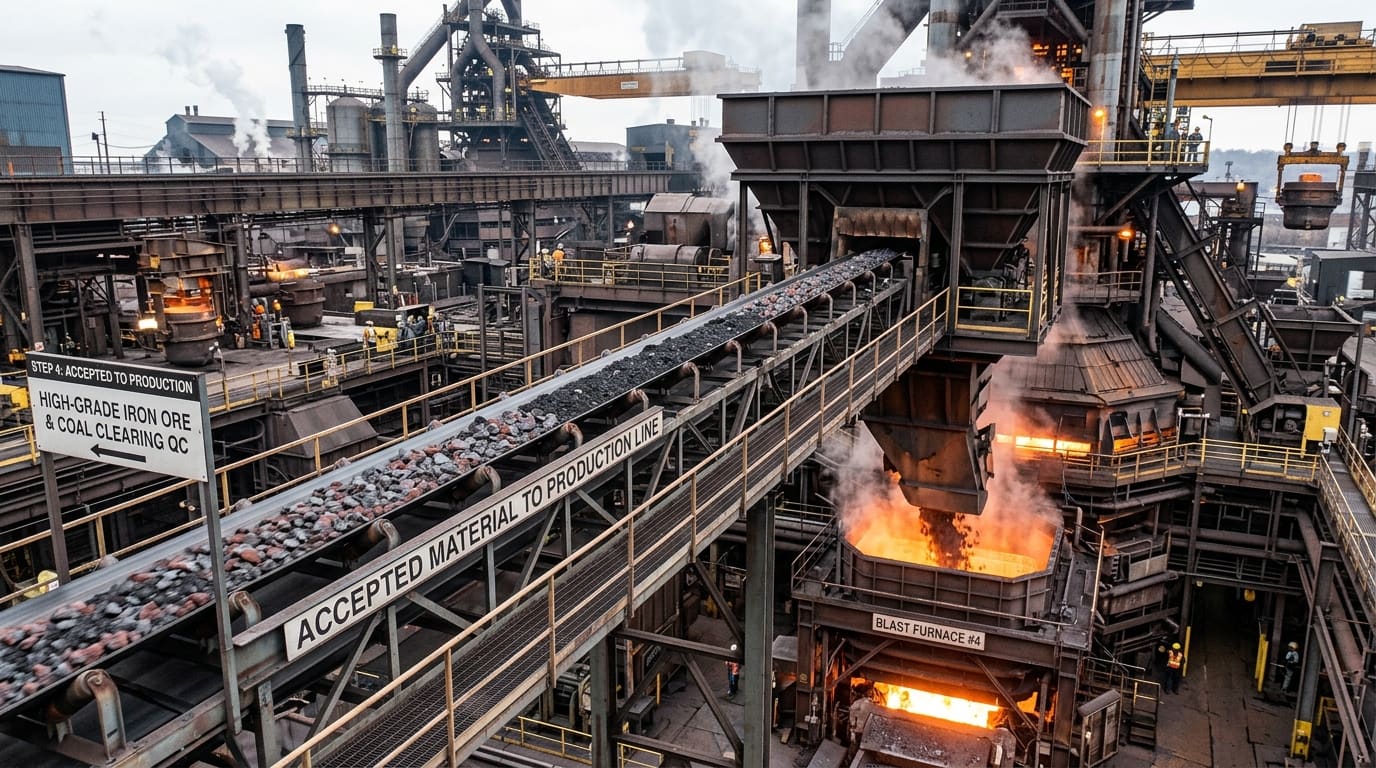
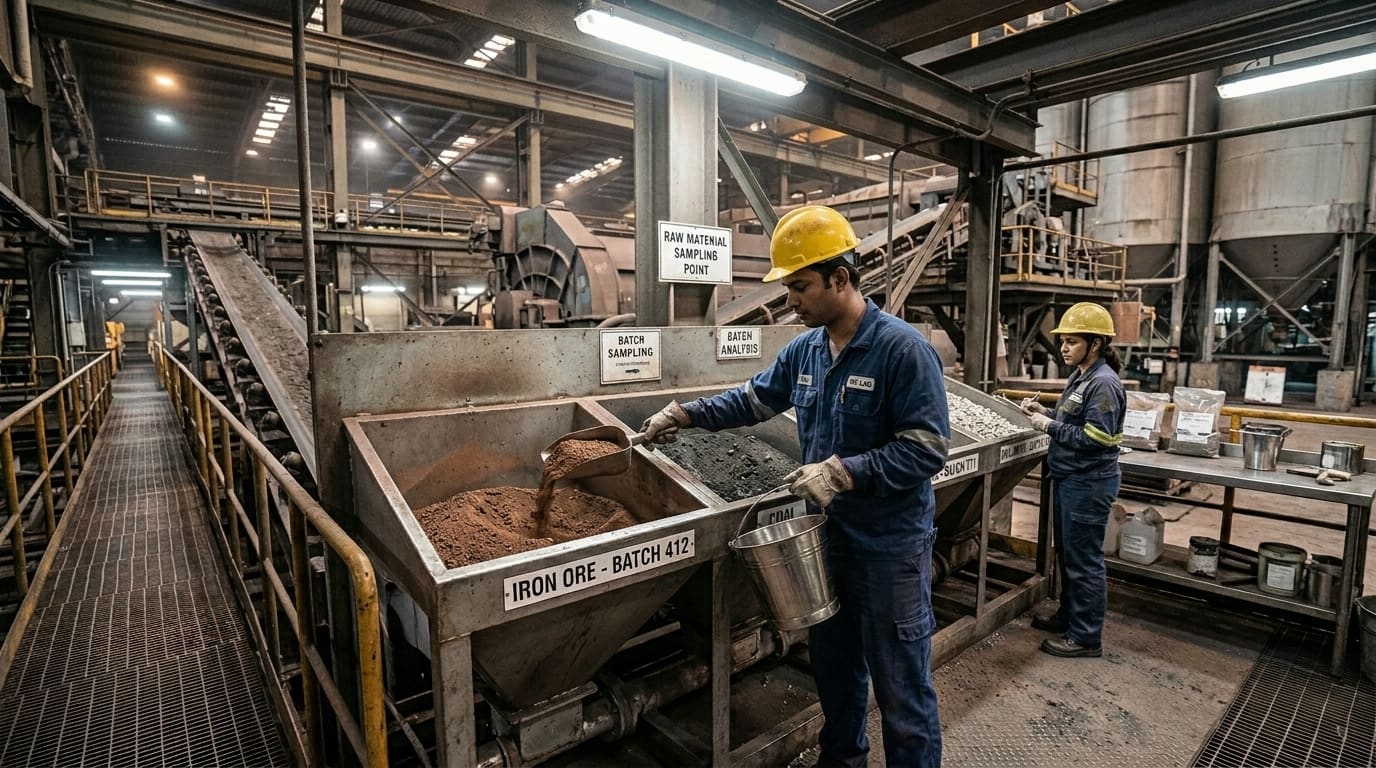
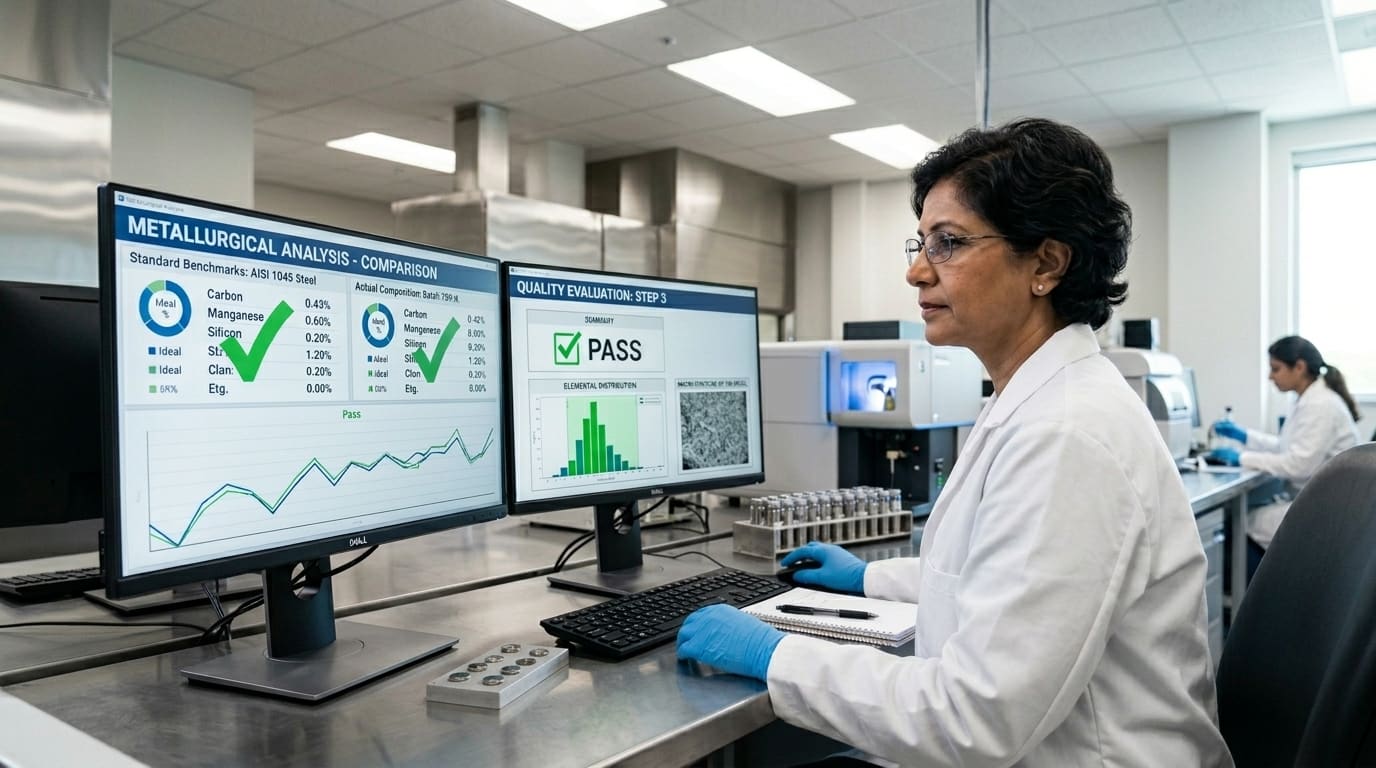
Before anything enters the plant, it has to earn its place there. Every incoming batch of iron ore, coal and dolomite is sampled and tested against a defined chemical benchmark, nothing moves to production until it clears that bar.

Chemist analyzing a steel sample in the lab Iron ore entering the production line Technicians collecting an incoming material sample Material sample under pass/fail evaluation
1. Sample Collection
A representative sample is drawn from every incoming batch, not just the top layer of a delivery.
2. Chemical Composition Testing
The sample is broken down and tested against the composition range each material is expected to meet.
3. Pass / Fail Evaluation
Results are checked against the accepted range before any material is cleared.
4. Accepted → Production
Cleared material moves straight into the production stockyard.
5. Rejected → Returned
Anything outside range is rejected and sent back to the supplier, no exceptions.
02
LIVE MONITORING

DRI Live Monitoring & Lab Analysis

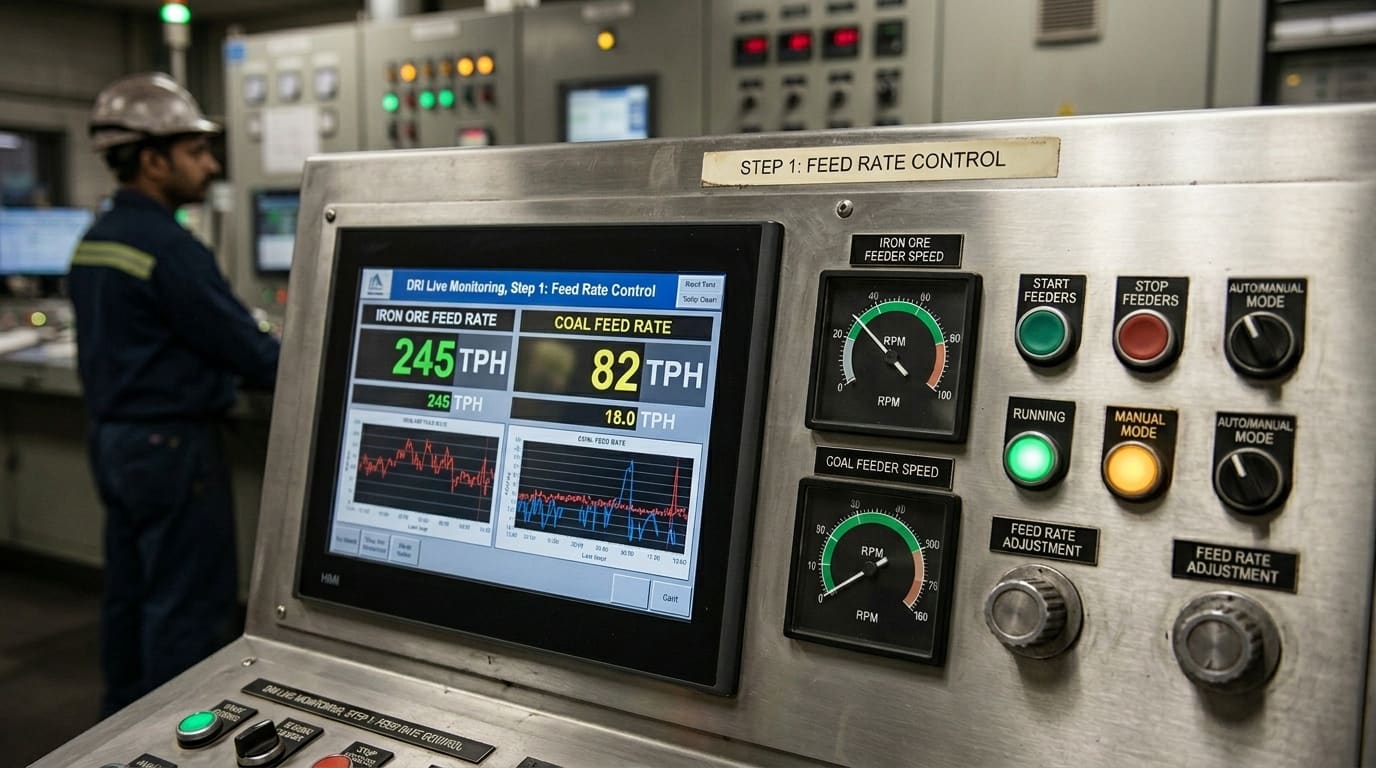
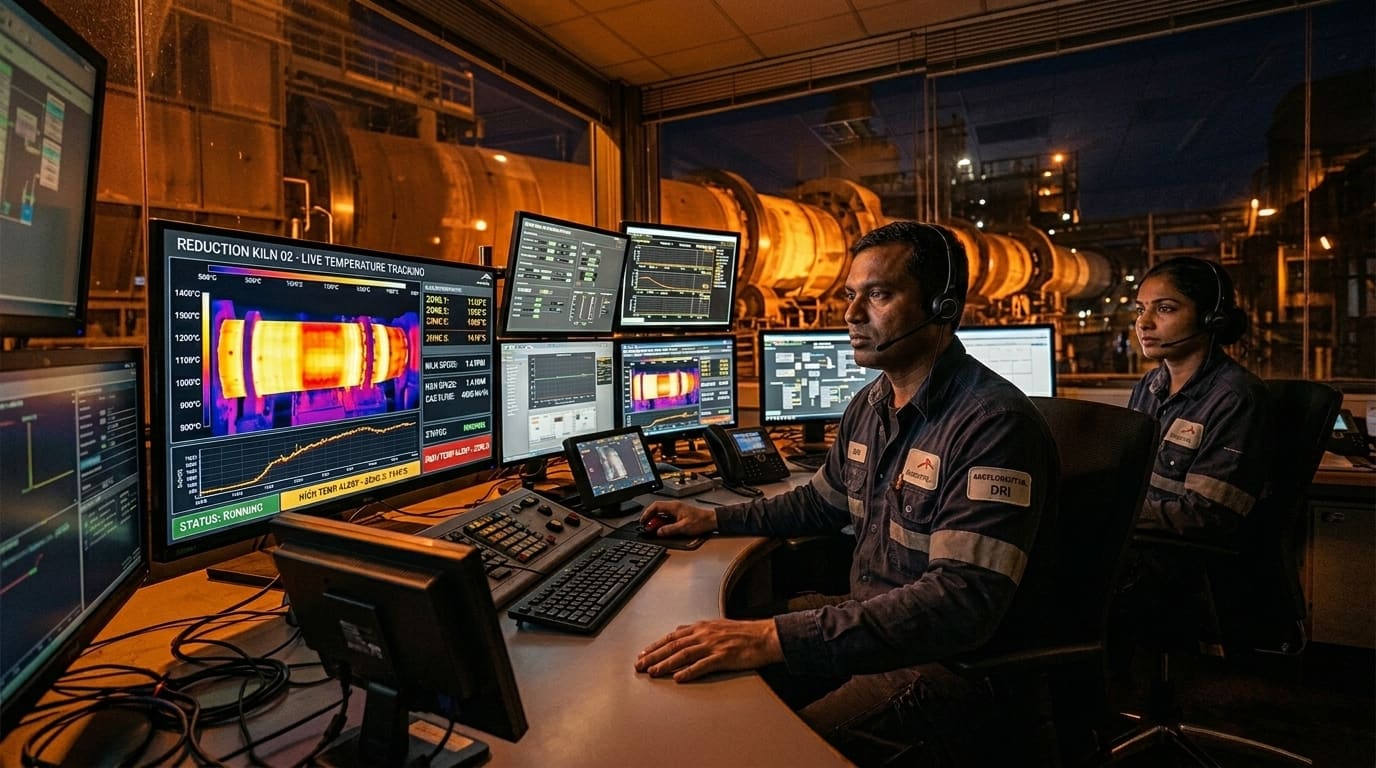
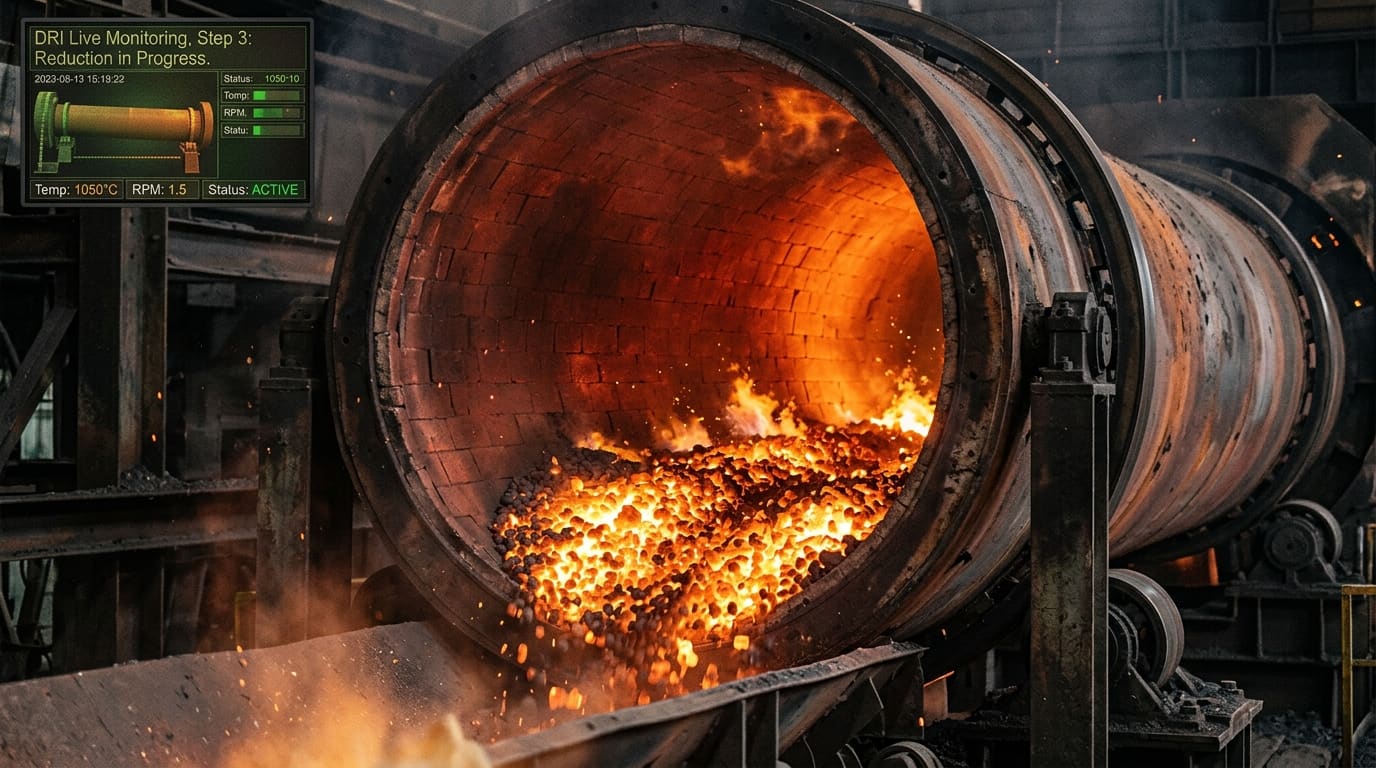
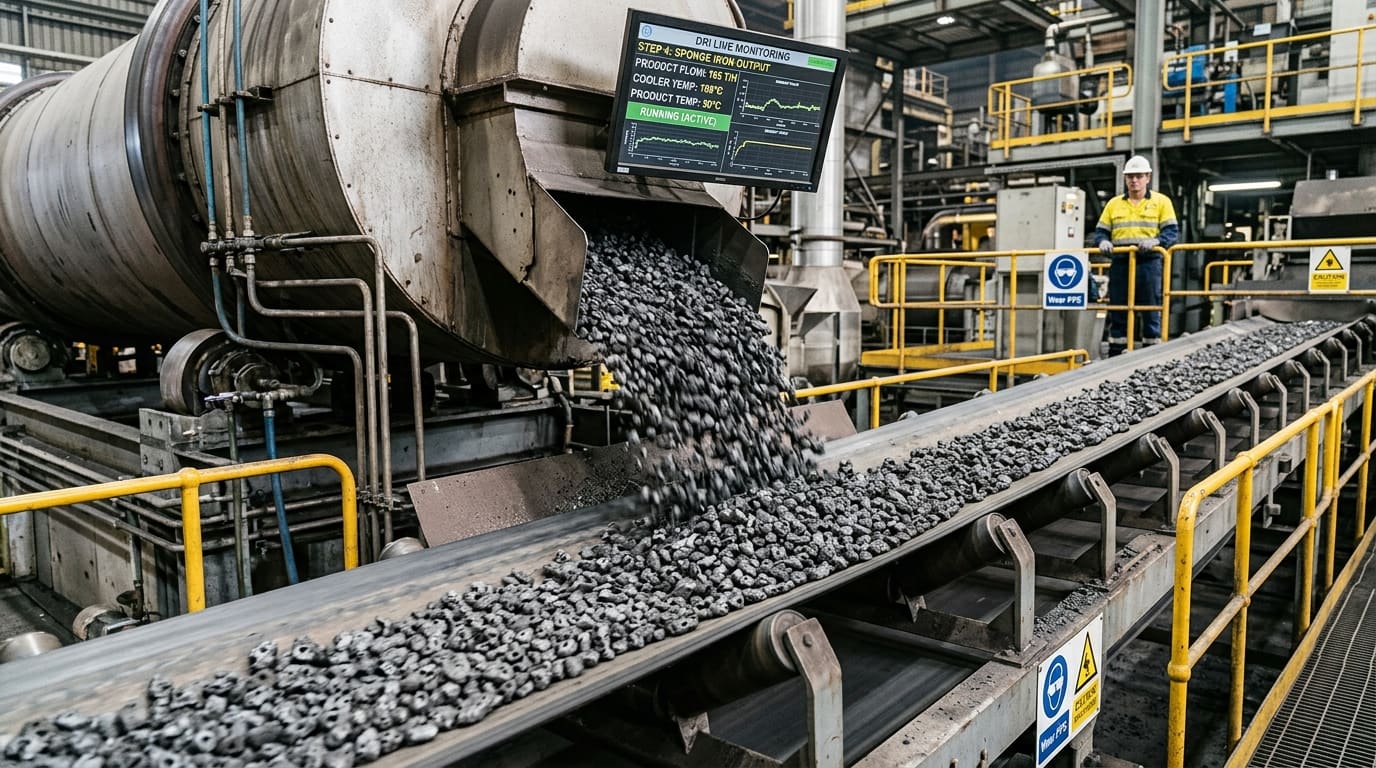
Reduction is a live process, not a set-and-forget one. Temperature and feed rate are watched continuously while the kiln runs, and the sponge iron that comes out the other end still has to pass its own lab check before it counts as finished.

Monitoring iron ore feed rate Operators monitoring kiln temperature Iron ore reducing inside the kiln Sponge iron output on the conveyor
1. Feed Rate Control
Pellets and coal are fed in at a rate tracked continuously from the control room.
2. Live Temperature Tracking
Kiln temperature is monitored in real time throughout the reduction cycle.
3. Reduction in Progress
Oxygen is stripped from the ore as it moves through the kiln.
4. Sponge Iron Output
The reduced material exits the kiln as sponge iron.
5. DRI Lab Analysis
A final chemical analysis in the lab confirms the output meets specification.
03
LAB TEST

SMS Lab Analysis

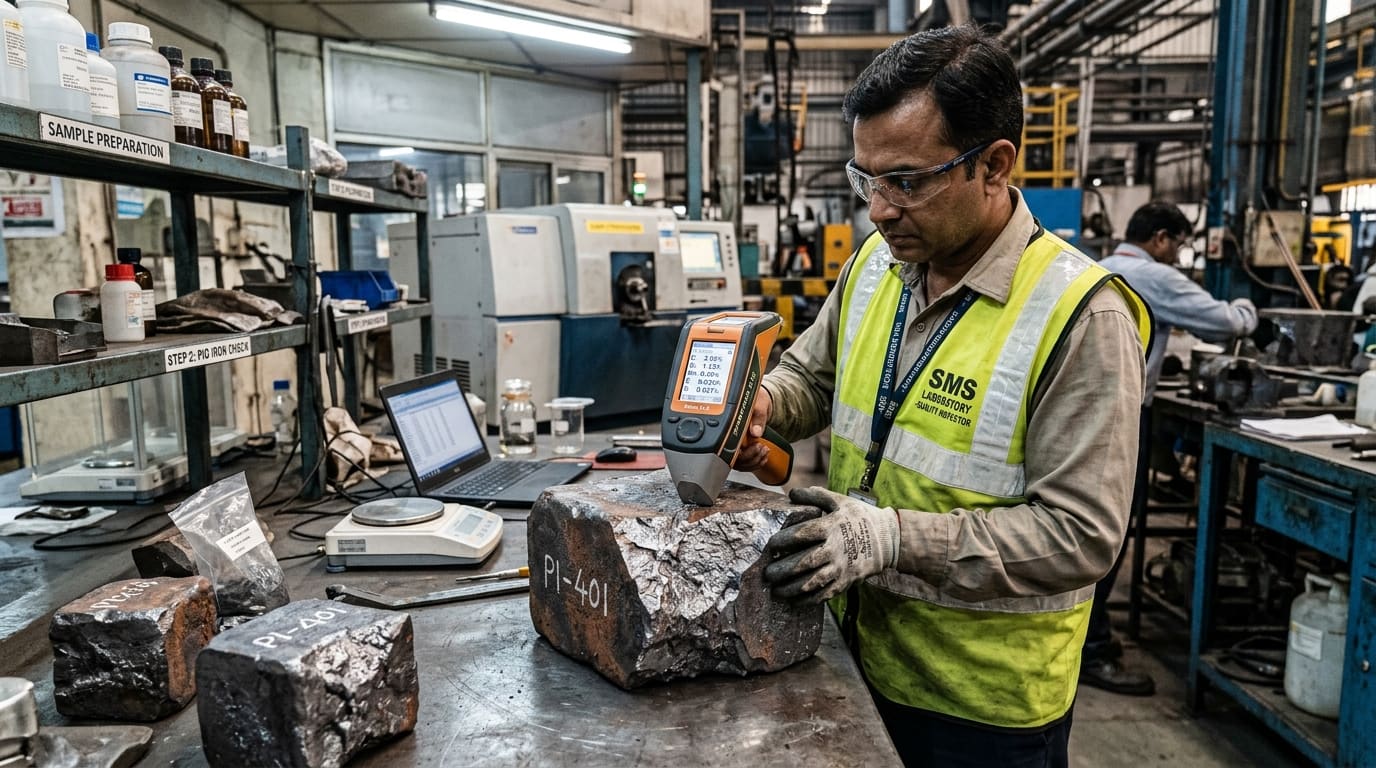
Three different inputs converge before melting, sponge iron, pig iron and ferro alloys, and each has to be individually verified. All three are checked before anything is cleared into the furnace.

Inspector examining incoming pig iron Technicians testing material chemistry Quality control manager reviewing lab results Engineers monitoring thermal readings
1. Sponge Iron Check
Composition of incoming sponge iron is verified.
2. Pig Iron Check
Composition of incoming pig iron is verified.
3. Ferro Alloy Check
Composition of incoming ferro alloys is verified.
4. Combined Clearance
All three inputs are cleared together before melting begins.
04
PROCESS CONTROL

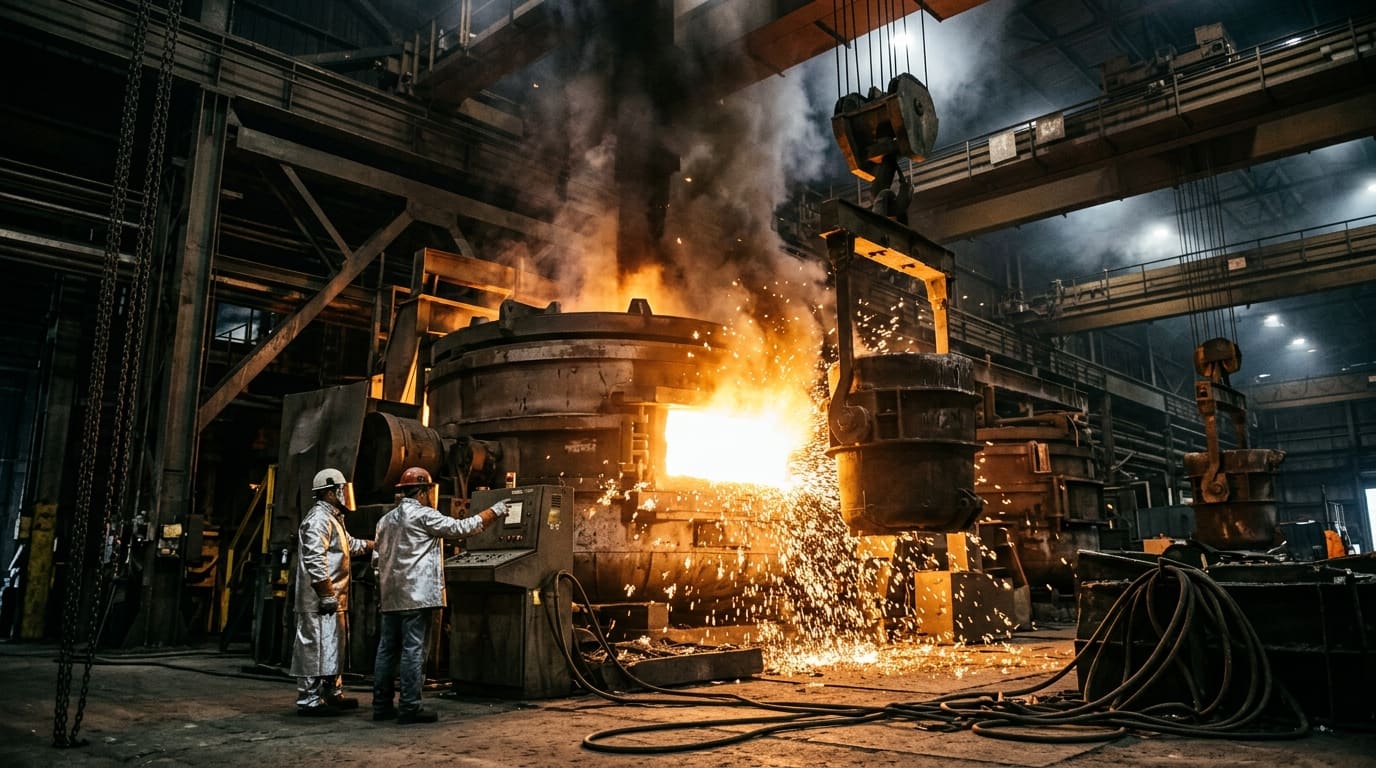
Alloy Dosing & Lollypop Sampling

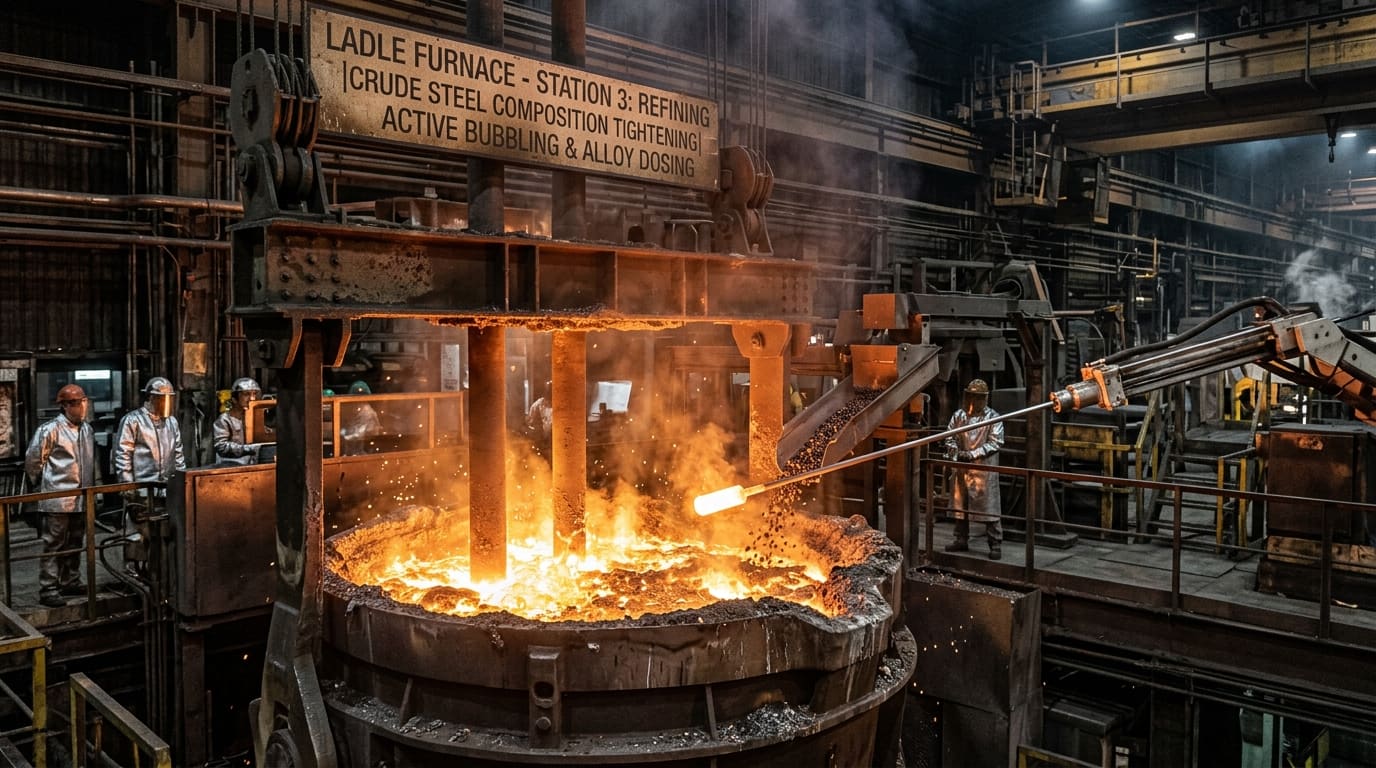
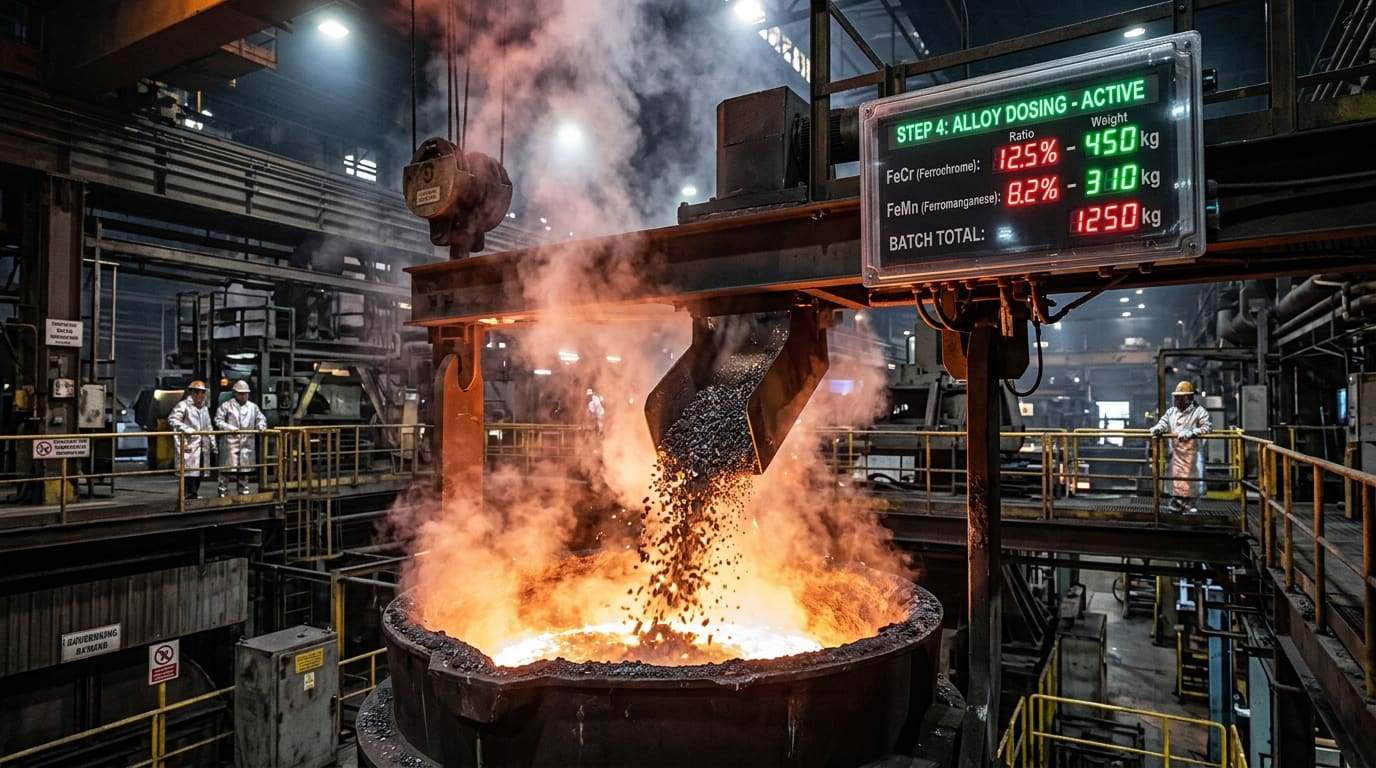
Melting is only half the job, what happens after determines the final composition. Once slag is removed, the crude steel is refined and dosed with alloys to a precise ratio, verified with a quick sample pulled straight from the melt.

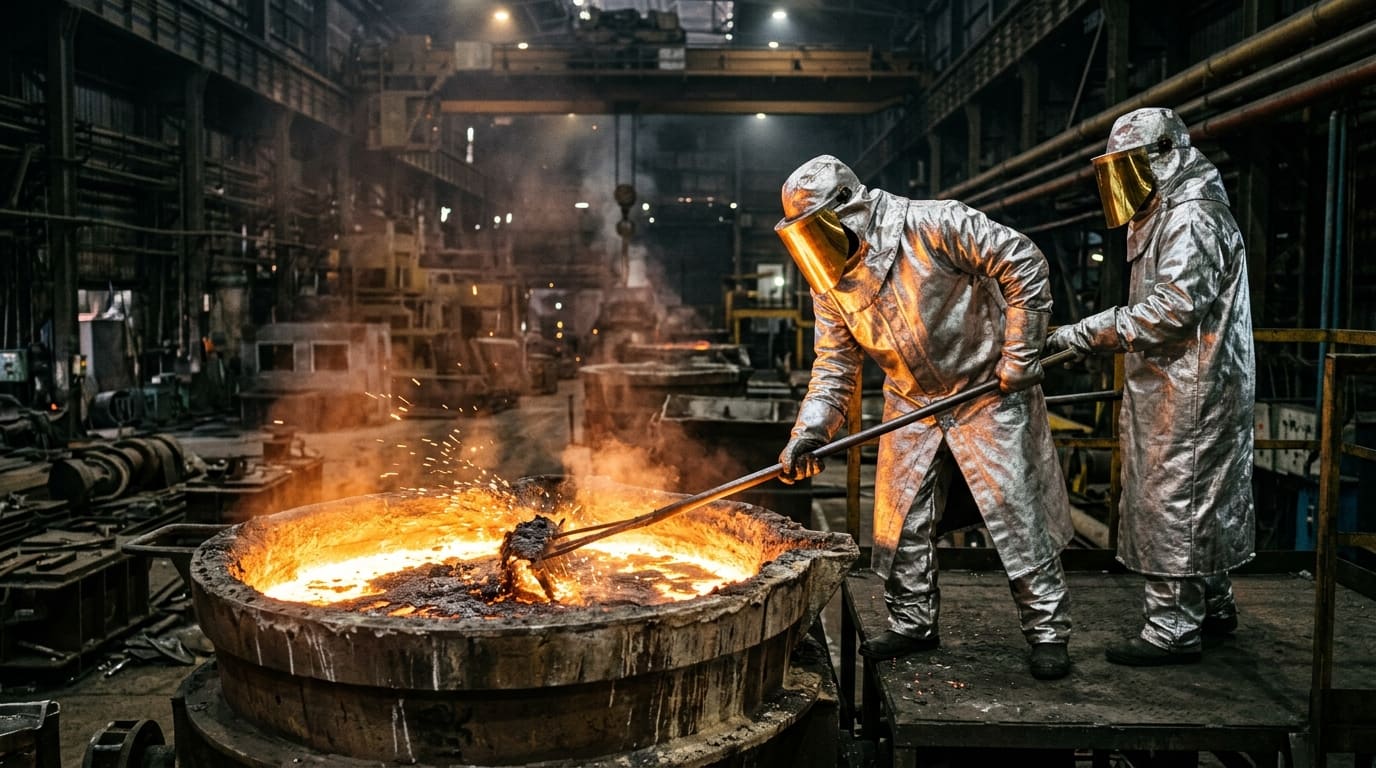
Steel melting in the electric furnace Steelworkers skimming slag off the melt Crude liquid steel being refined Alloys dosed into molten steel
1. Melting
Inputs are melted down into crude steel.
2. Slag Removal
Impurities that rise to the surface are removed.
3. Refining
The remaining steel is refined to tighten its composition.
4. Alloy Dosing
Alloys are added in a controlled ratio to hit the target grade.
5. Lollypop Sampling
A sample is pulled directly from the melt and tested before the heat is finalised.
05
LAB TEST

Billet Inspection & Documentation

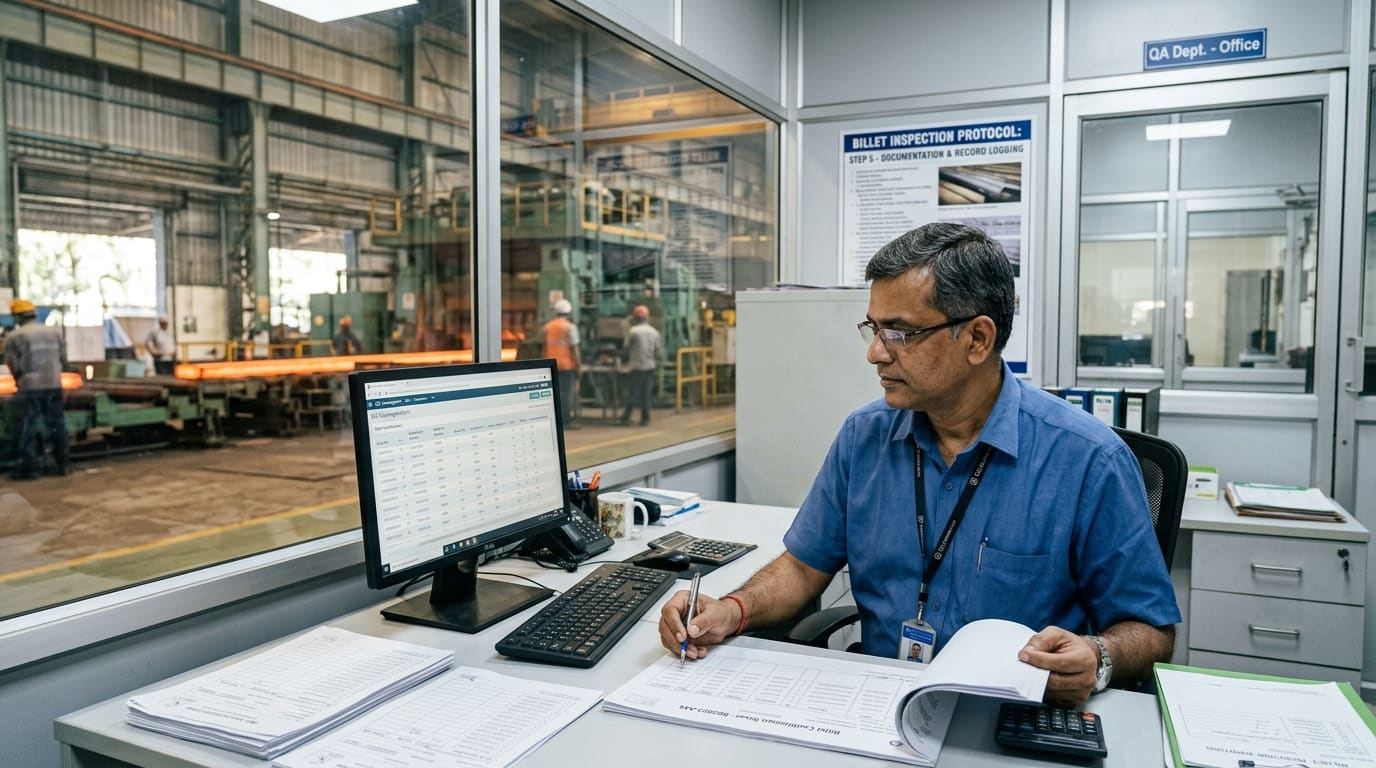
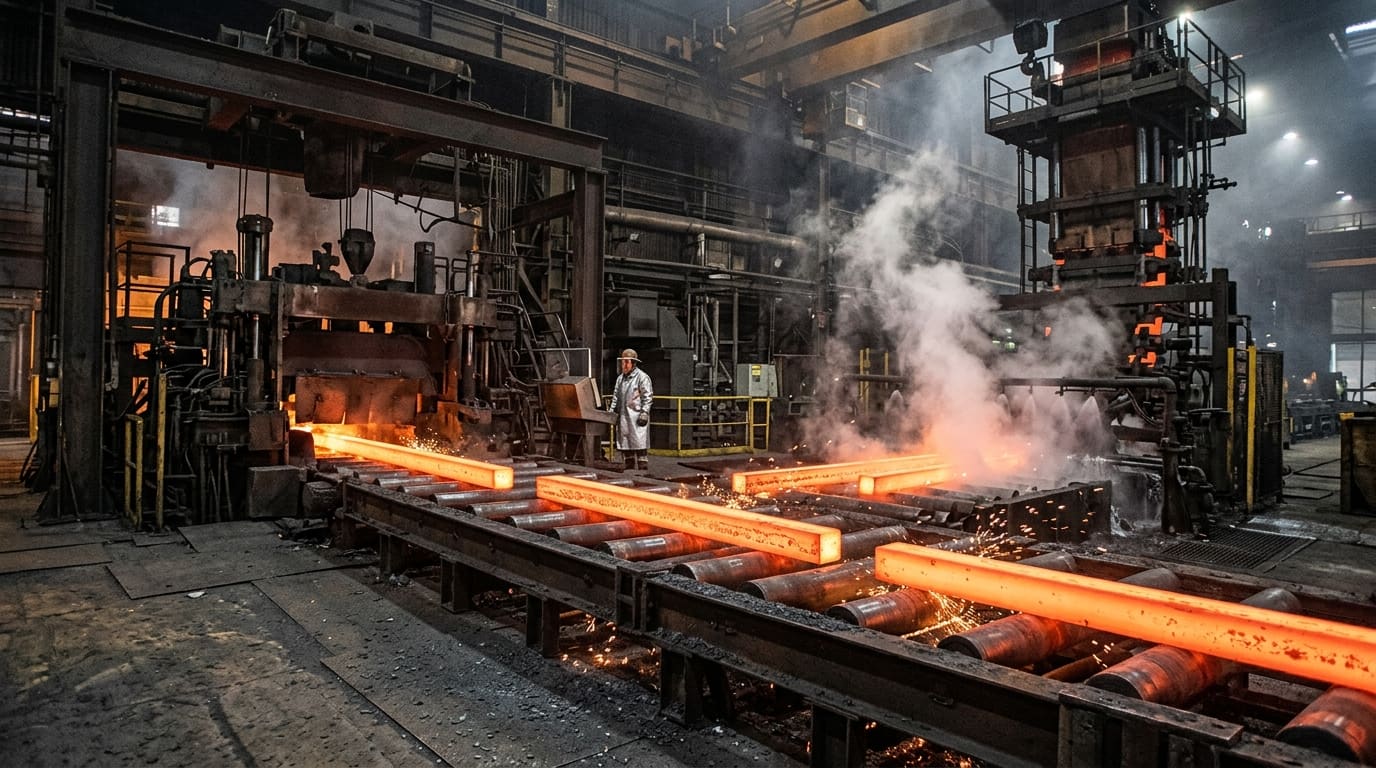
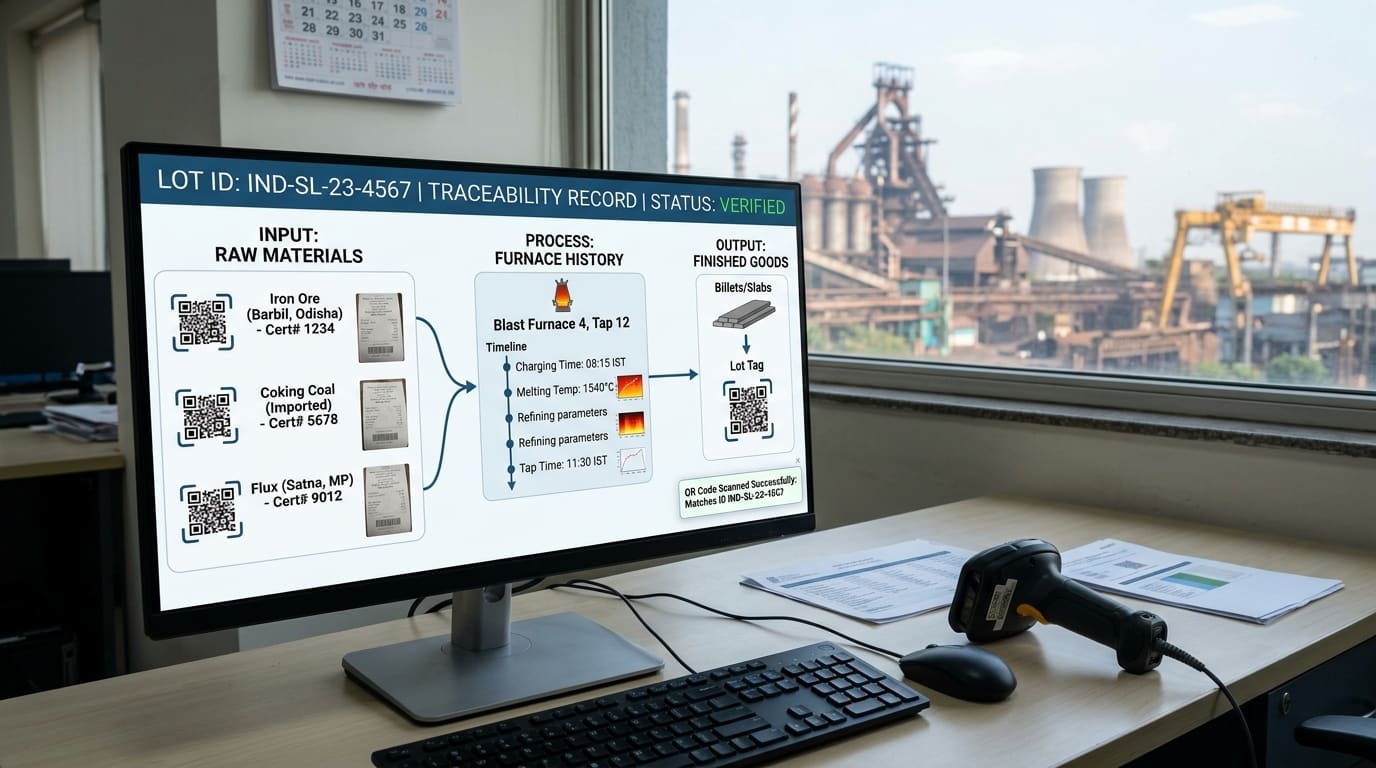
What comes out of continuous casting gets checked from every angle, how it looks, how hot it is, and what it's made of, with every result logged before the billet is cleared for rolling.

Billets emerging from the casting machine Scientist testing billet composition Database software showing traceability records
1. Casting Output
Billets emerge from the continuous casting line.
2. Visual Inspection
Surface and shape are checked for defects.
3. Temperature Check
Billet temperature is verified against the expected range.
4. Final Chemical Analysis
A closing composition check confirms the billet matches its target grade.
5. Documentation
Every result is logged against that billet's own record.
06
LIVE MONITORING

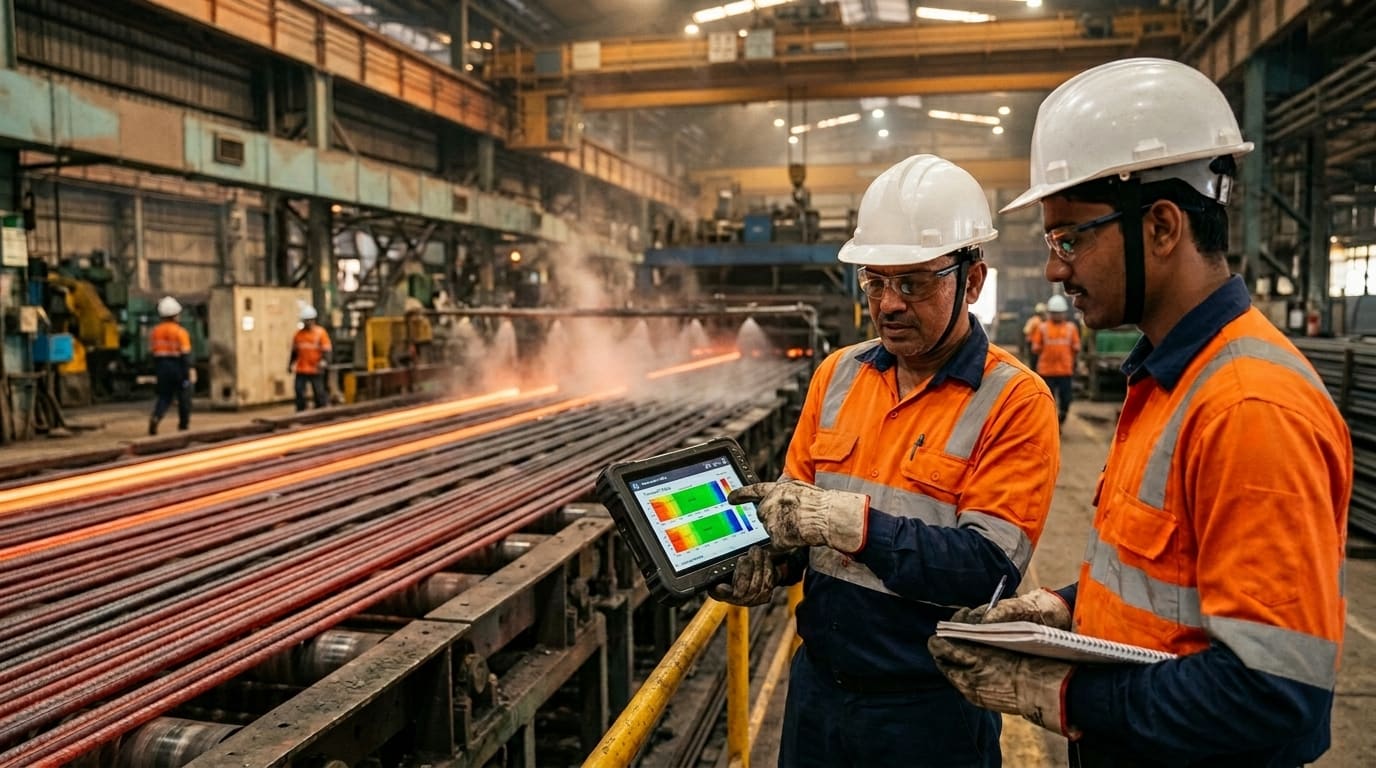
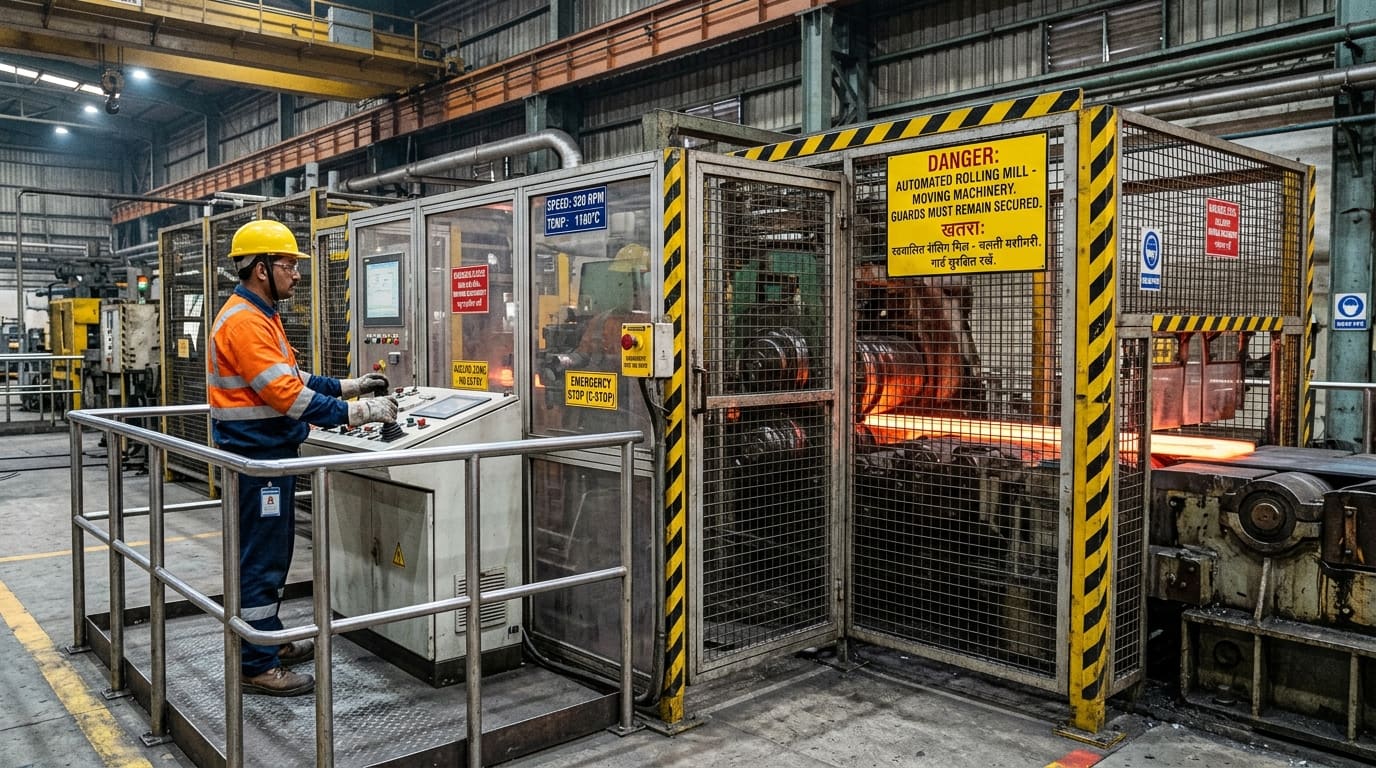
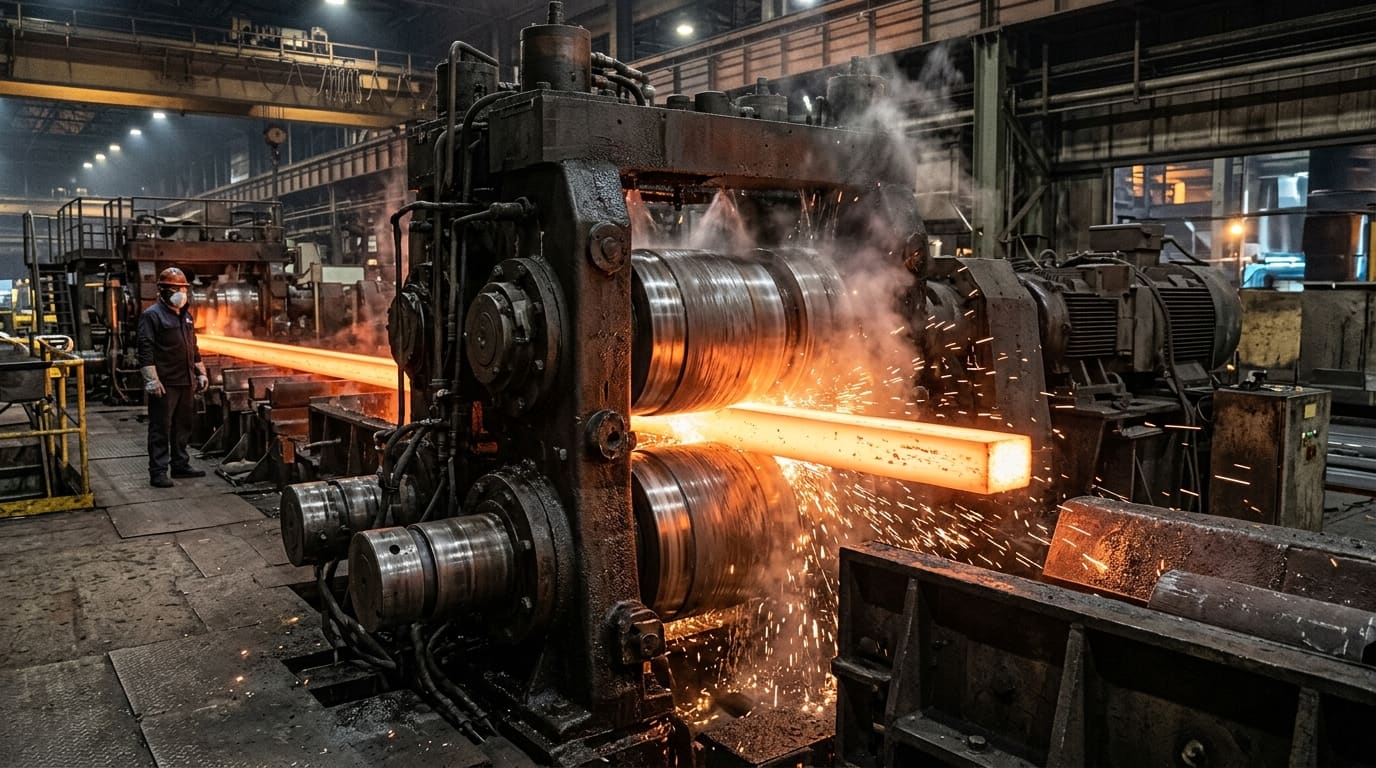
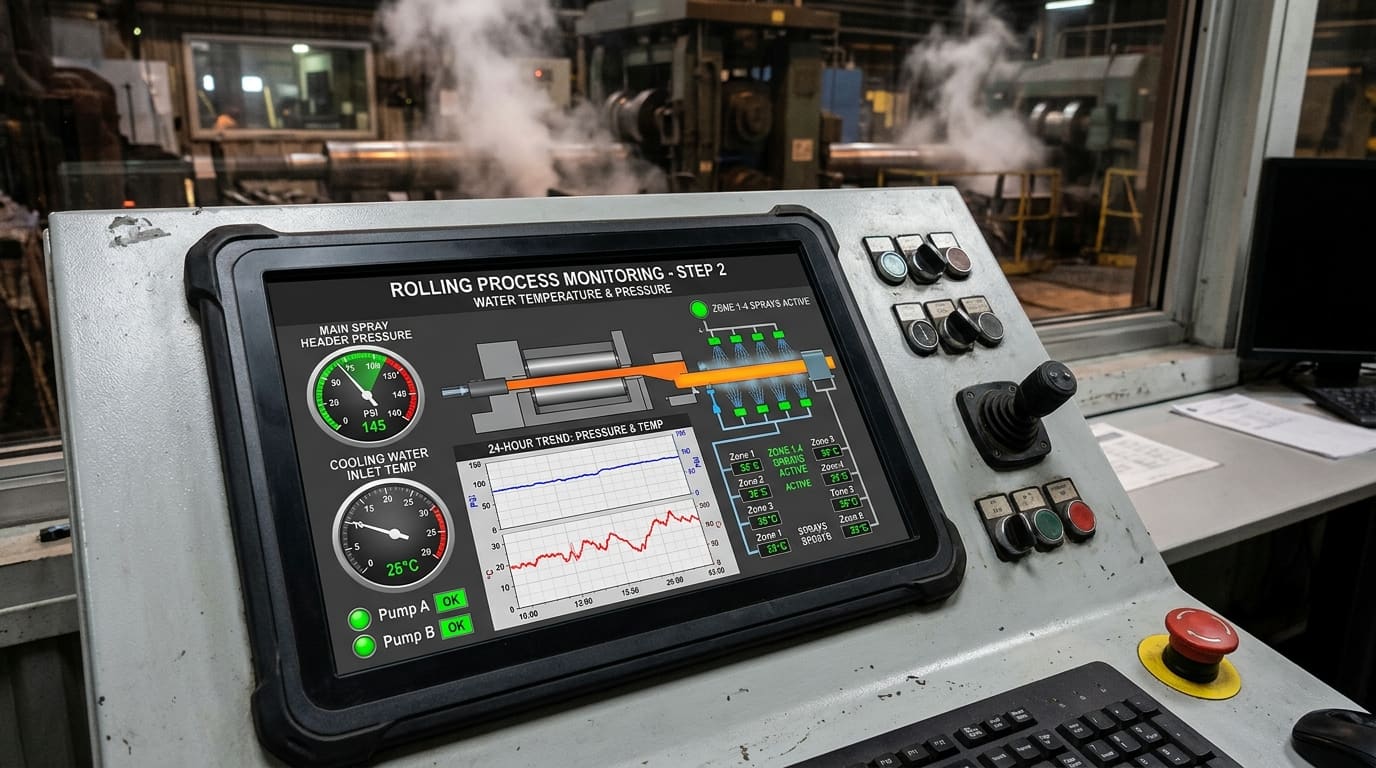
Rolling Process Monitoring

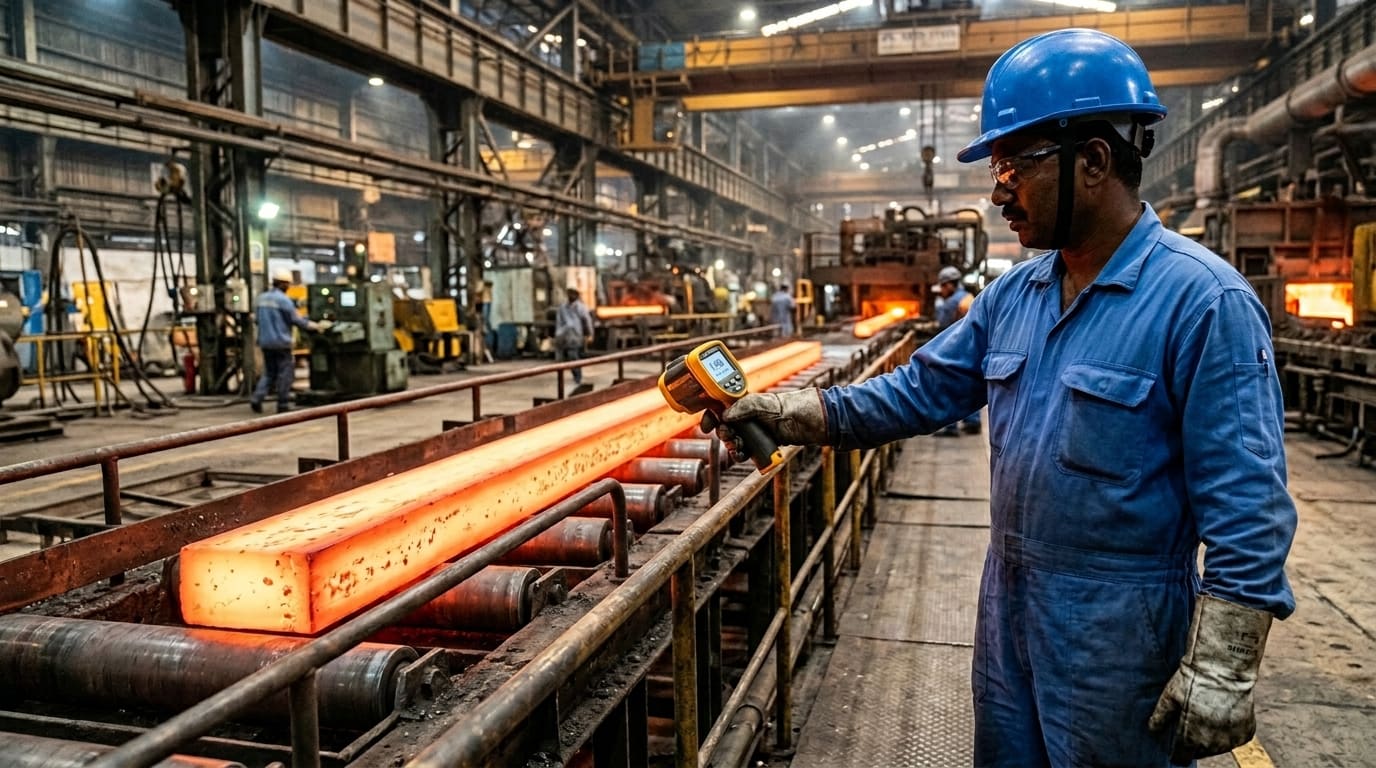
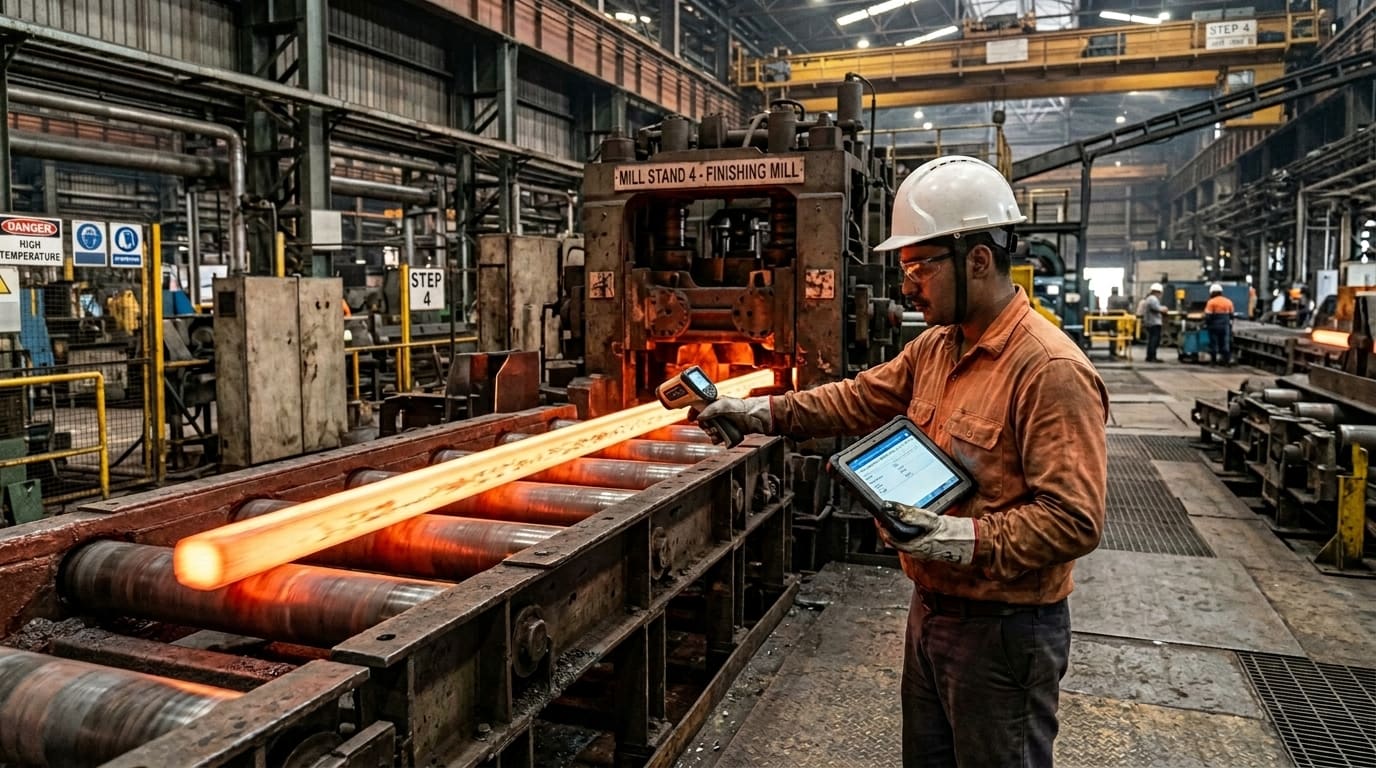
Rolling runs under continuous temperature and pressure supervision, every billet is tracked in, the cooling water is watched throughout, and every bar is tracked back out, so nothing about the pass goes unrecorded.

Technician operating the rolling mill Rollers compressing a steel billet Monitoring industrial water cooling Technician checking bar temperature Technician measuring steel bar thickness
1. Incoming Billet Temperature
Each billet's temperature is checked before it enters the mill.
2. Water Temperature & Pressure
Cooling water is monitored throughout the rolling pass.
3. Rolling Pass
The billet is progressively rolled down to its final section.
4. Outgoing Bar Temperature
Exit temperature is recorded as the finished bar leaves the mill.
5. Equalizing Temperature
A final equalizing temperature is logged to confirm consistent quenching.
07
LAB TEST

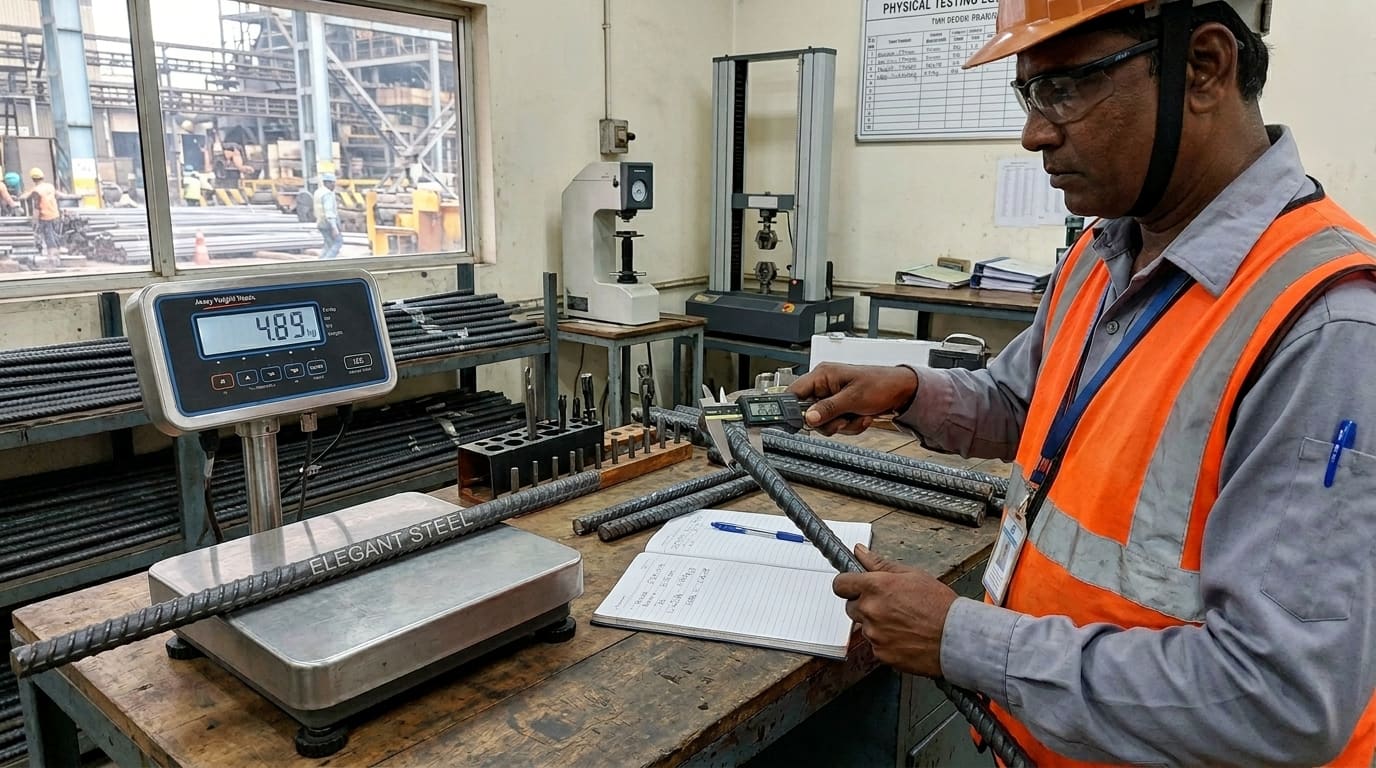
Finished Material Testing

Before anything ships, the finished product is tested across every property that matters, physical, mechanical and chemical, and the results are documented against that batch.

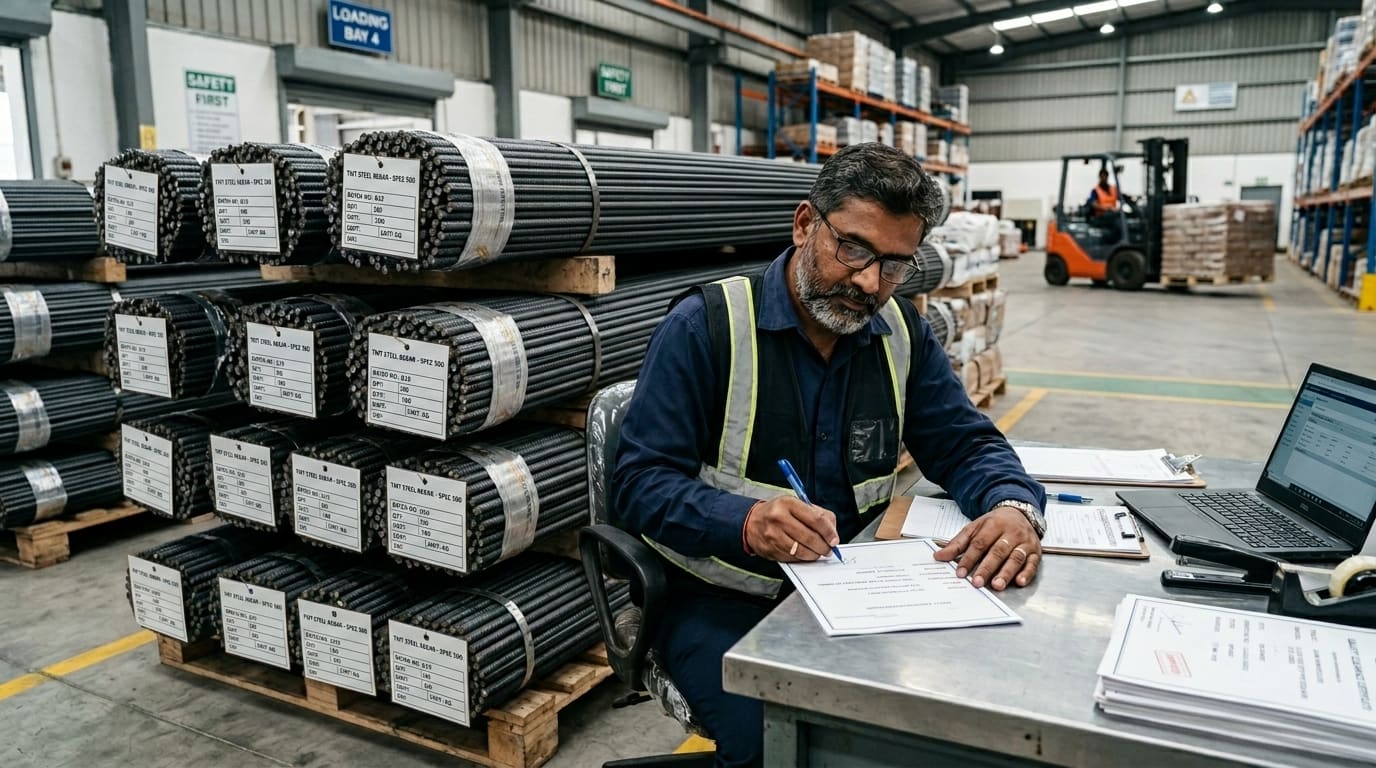
Engineer inspecting finished TMT bars Researcher analyzing steel bar strength Inspector testing steel bar dimensions Supervisor signing the quality certificate
1. Physical Property Testing
Dimensions, weight and surface finish are checked against specification.
2. Mechanical Property Testing
Strength and ductility are tested to confirm the grade holds up.
3. Chemical Property Testing
A closing composition check confirms the finished material's chemistry.
4. Documentation & Clearance
Results are logged and the batch is cleared to ship.
08
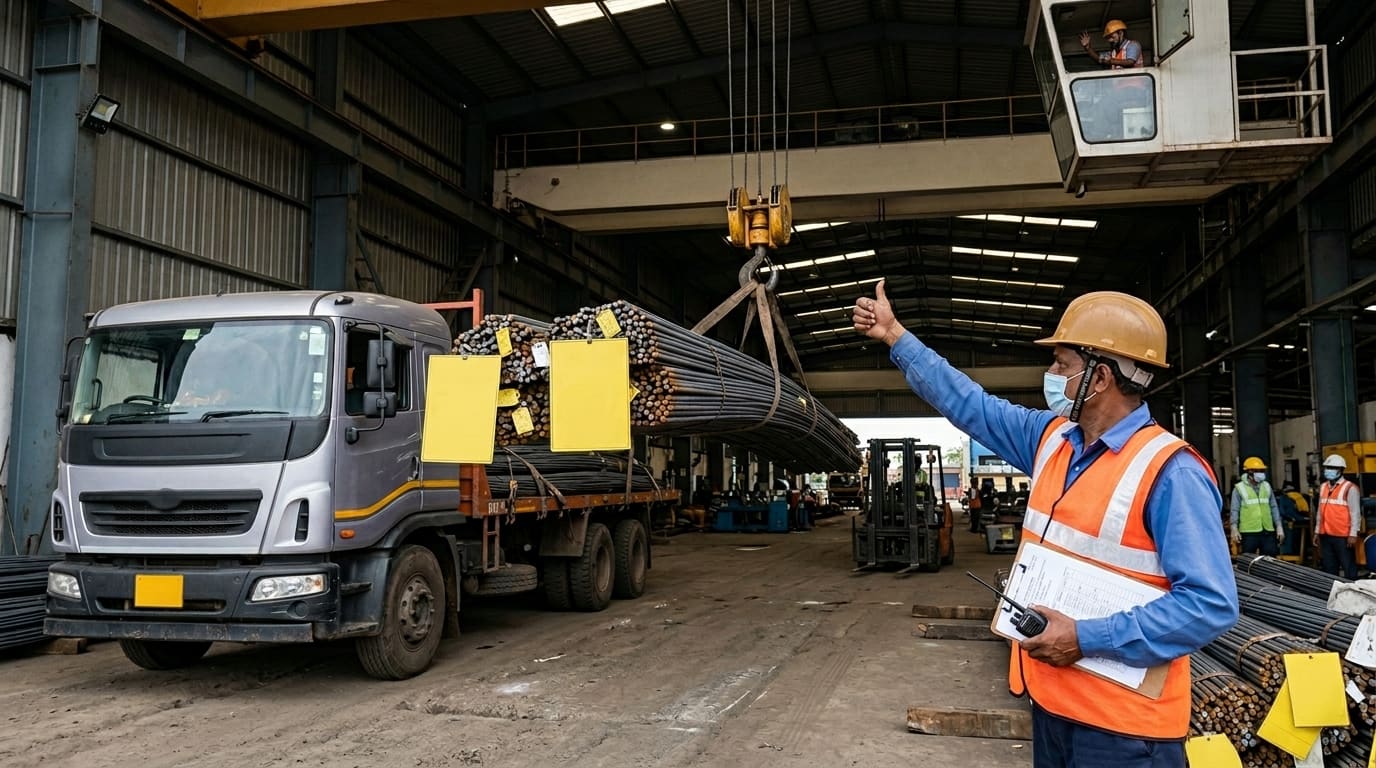
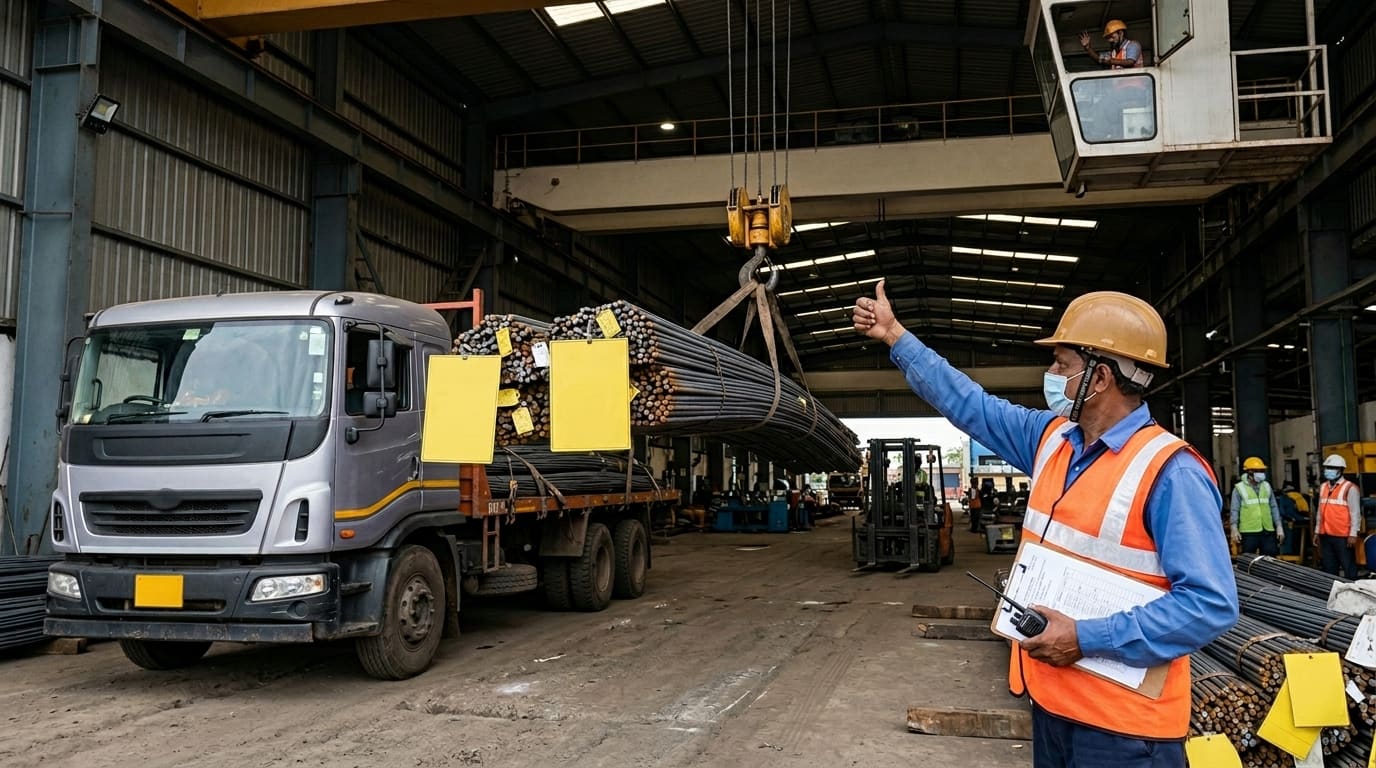
DISPATCH

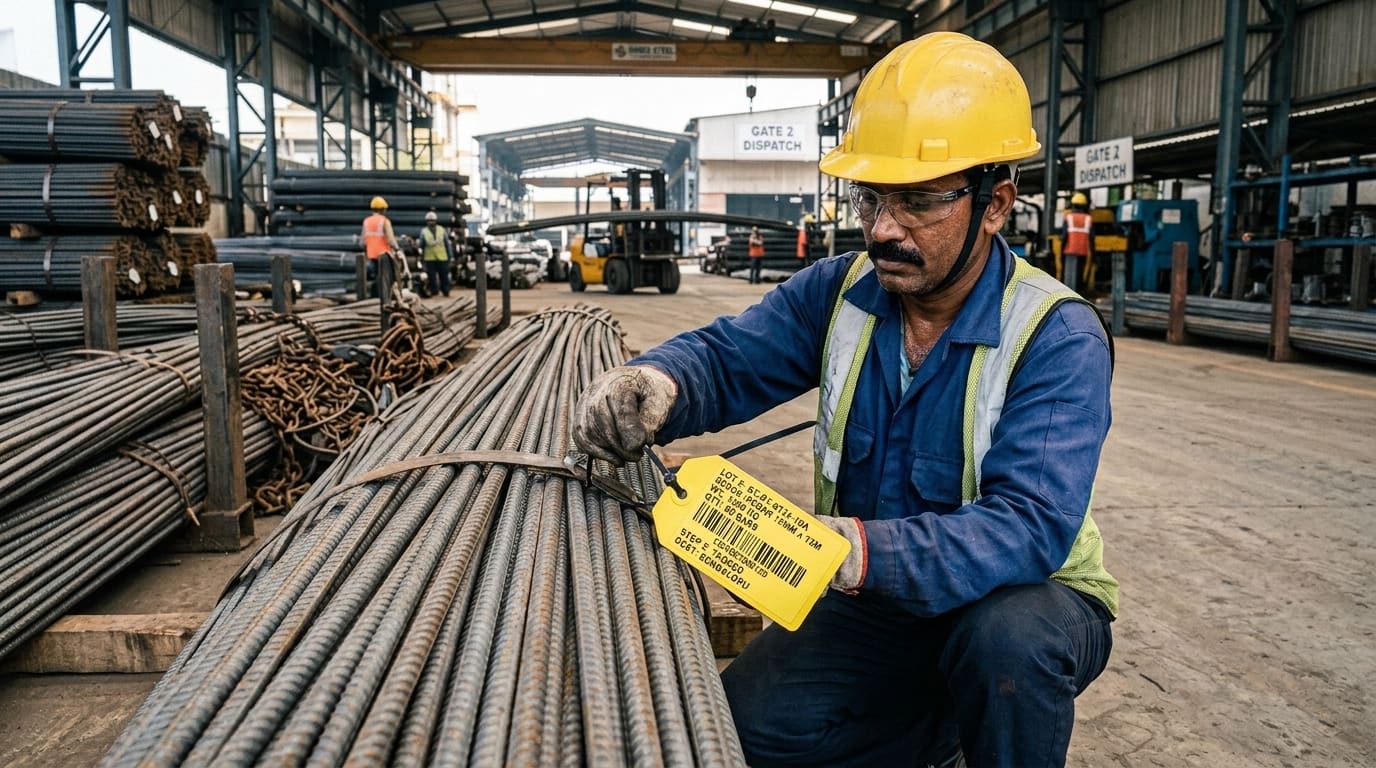
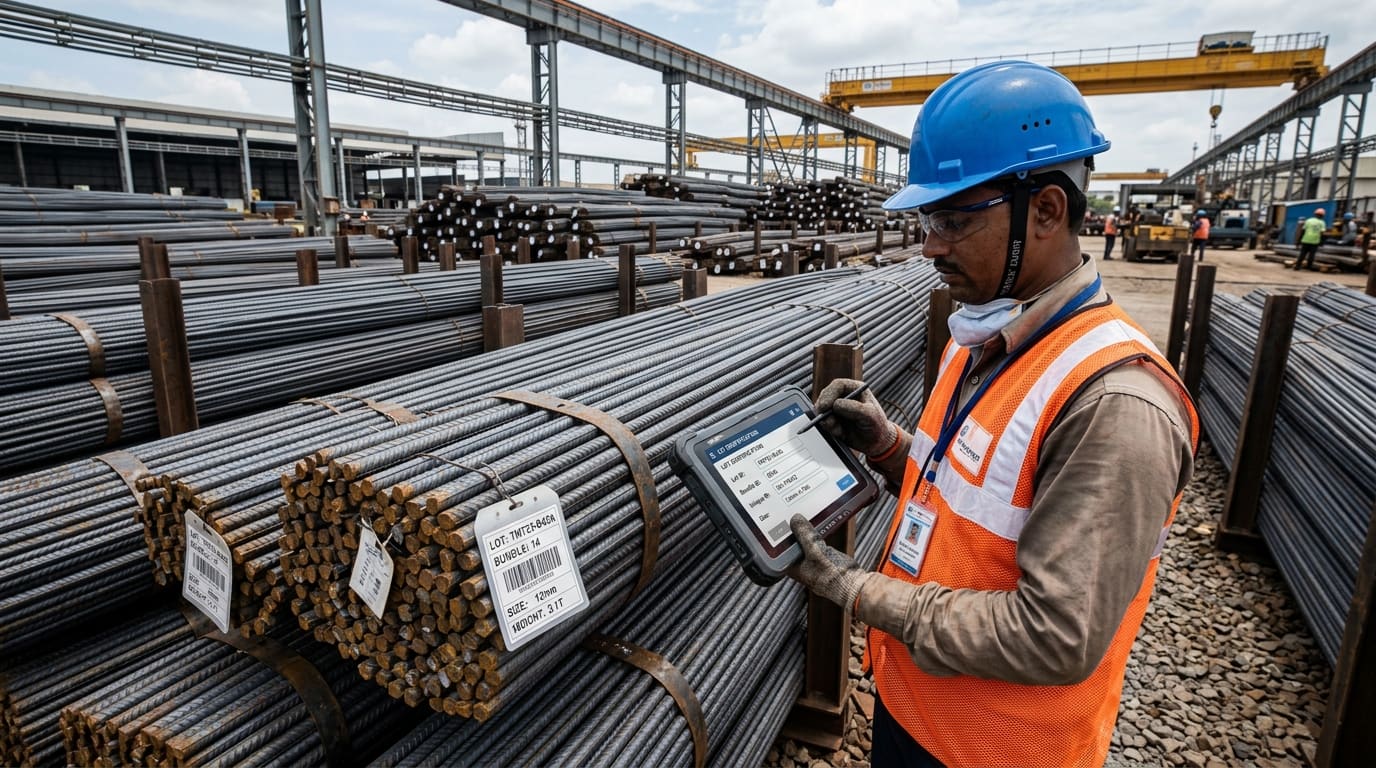
Lot Tagging & Dispatch Clearance

Nothing leaves without a traceable identity. Every lot is tagged, logged and cleared before dispatch, so any bar that leaves the plant can be traced straight back to the batch it came from.

Warehouse worker tagging steel bars Logistics coordinator signaling during loading Inventory controller logging steel lots Logistics coordinator signaling a dispatch truck
1. Lot Identification
Every finished lot is assigned its own identifying record.
2. Physical Tagging
Tags are attached marking the lot for tracking.
3. Traceability Record
The lot's full production history is logged against its tag.
4. Dispatch Clearance
The lot is cleared and released for shipment.
DISCIPLINE, DOCUMENTED

Quality Isn't a Department

Quality Approach

Forward and backward integration means the entire chain, raw material to finished product, is managed under one roof, with in-house quality control laboratories at every plant and competitive pricing sustained through real operational efficiency, not shortcuts.

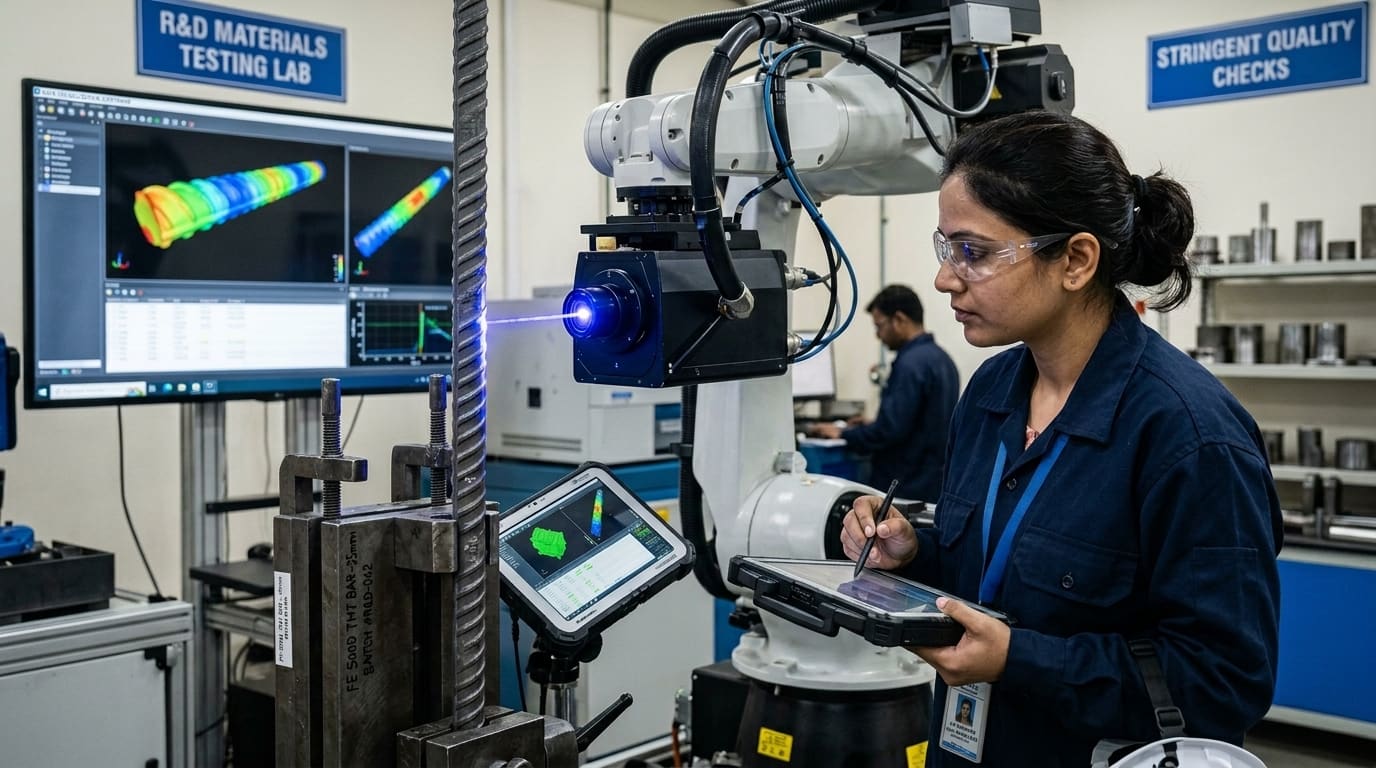
Research & Development

Our R&D team focuses on modernising plant technology, faster testing procedures, and stringent quality checks, developing techniques that ease construction-site operations and cut labour cost, time and money for the customers who buy from us.

Employee Safety

Safe equipment and safe procedures at every facility, treated as a core operational priority tied directly to morale, efficiency and the company's own bottom line, not a compliance checkbox.

Tested by Us. Verified by Others.

We don't just grade our own work, independent bodies do too. See the awards and certifications that back up every standard on this page.