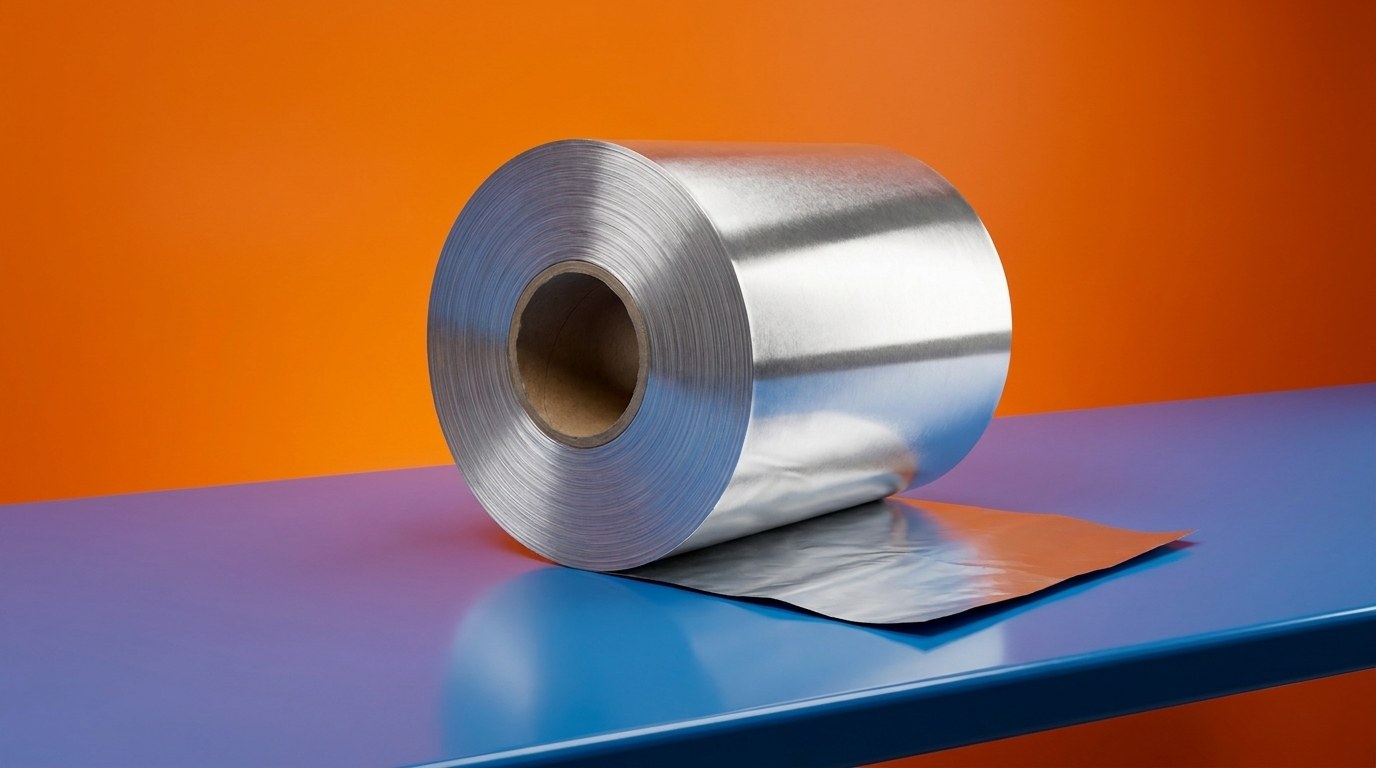
Pop a tablet out of a blister pack and the foil backing you just peeled away is doing more engineering work than it looks like. That thin layer isn't there for presentation, it's the reason the tablet inside is still effective months after it was manufactured, in a climate that would degrade it fast without a real barrier standing between it and the air.
What the Foil Is Actually Blocking
Aluminium foil offers barrier properties against moisture, oxygen and light that few packaging materials can match at the same thickness.1 Pharmaceutical formulations, tablets, capsules, lozenges, are chemically vulnerable to exactly those three things: moisture can trigger hydrolysis and microbial growth, oxygen drives oxidative degradation, and light can break down photosensitive compounds. Cold-form aluminium foil at 20–25 microns thick delivers a moisture and oxygen barrier that lets a drug hold its potency across a wide range of climates, including the heat and humidity common across much of India.1
No common plastic film matches that barrier performance at comparable thickness. That's why, despite decades of packaging innovation, blister and strip packaging built on aluminium foil remains the default format for solid-dose pharmaceuticals worldwide rather than a legacy holdover.
Where the Growth Is Actually Coming From
Within the aluminium foil packaging market, the segment specifically built for pharmaceutical blister packs, foils in the 0.09mm–0.2mm range, is its fastest-growing category.2 That's a meaningful signal: the growth isn't evenly spread across all foil applications, it's concentrated in the format hospitals, pharmacies and pharma manufacturers rely on to keep medication stable and tamper-evident from factory to patient.
Why India Specifically Matters Here
India is the world's largest supplier of generic medicines, and that position alone makes it one of the largest consumers of pharmaceutical-grade foil on earth.3 India's pharmaceutical industry was valued at roughly USD 50 billion in 2023, with exports exceeding USD 26.5 billion, every one of those export shipments of solid-dose medicine leaves the country in blister or strip packaging, almost all of it aluminium-foil-based.3 As emerging generics hubs in India commission new blister lines to keep up with that export demand, call-off volumes for coated and laminated pharmaceutical foil reels rise with them.2
There's a second tailwind pushing demand in the same direction: India's ban on specific single-use plastic items, in effect since July 2022, has pushed packaging away from plastic film and toward recyclable formats, aluminium foil, fully recyclable and already the pharmaceutical standard, has picked up volume from that shift on the FMCG and food-packaging side as well.2
Beyond the Blister Pack
The same barrier logic that protects a tablet applies, with different emphasis, to household and FMCG foil: kitchen and food-service foil, semi-rigid container foil for ready-to-eat packaging, and lidding foils with induction seals for jars and containers. Different thickness, different converting process, same underlying material property, a metal barrier that plastic film, at equivalent thickness, still can't fully replace.
Shakambhari's India Foils facility at SIPL Mogra in Hooghly rolls foil across this range, from 9 to 60 microns, for pharmaceutical, household and industrial applications, functioning as a cold forming foil supplier to converters who need both bare and coated pharma aluminium foil, 9 to 60 micron, from a single mill.